G in Indian women fashion

Talking about Indian women’s fashion, if you have been following this series, I will introduce the alphabet with a dress and a weave. The reason I do that is we already know that there is a garment and the weave is mentioned so that we get to know about the fabric that it’s been used for so that we could also come up with ideas to bring that idea of ours to life. The one that uses the Indian weave for the outfit of your dreams. Because who said you cannot have a haram pant in silk and pair it up with a chanderi tank top layered with a bagru print long shrug and accessorized with kundan long chains? After all, fashion is in the mind of a person who envisions how they would want to present themselves.

Today let us look at the alphabet G.


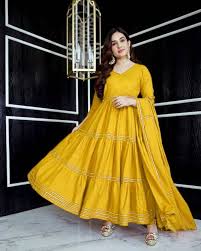
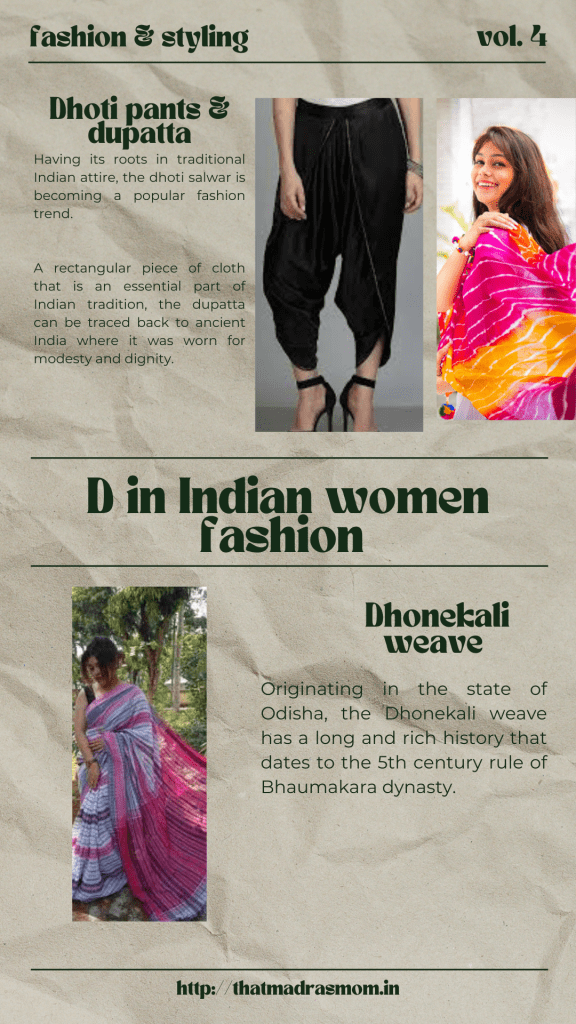
Ghaghara choli

Image source Myntra


Having been there for centuries, this traditional and elegant attire that comprises a long skirt, a scarf, and a blouse is the Ghaghara choli. Worn by women during festivities and special occasions this three-piece garment gleams elegance and beauty at first glance.
Heavily embellished with sequins, embroidery, or even stones, the long flowing skirt made of silk or luxurious material is the Ghaghara. A short sleeved tight fitted blouse that is paired is the choli and the midriff is visible since the choli is stitched short.


The choli can be of the same material as the skirt or even different. Depending upon the occasion, it can be amped up with stone or sequin work to look grander in appeal than the skirt. The color could also be the same with contrast work or a fabric that is of contrast color with minimal work would both work great with the Ghaghara. The neck designs also play an important role where it could be as halter, off-shoulder, or even backless. Overall, the choli should complement the long skirt, Ghaghara.


The final element that adds grandeur is the dupatta or the scarf which is draped over the shoulders or even covers the head. Heavily embellished with stones and embroidery the dupatta adds elegance and sophistication to complement the Ghaghara choli.


In addition to being aesthetic, the Ghaghara is also a comfortable garment that provides ease of movement because of the long skirt. The blouse can be stitched to fit perfectly for the body of the wearer.


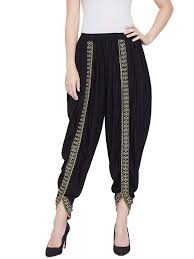
Gadwal

Image source meesho


A lightweight durable fabric that is distinctive and stands out because of its sheen and texture, the gadwal originated in the town of Gadwal, Telangana. A unique blend of silk and cotton threads the gadwal is made of high-quality craftsmanship and has exquisite designs.


In a gadwal saree, the body of the saree is made of cotton threads and the pallu has silk threads. The body and the pallu along with the border are then attached finally to make it lightweight by a technique called kuttu. The interlocking of silk and cotton threads requires precision and highly skilled craftsmanship. Also, to note is the time-consuming process. Owing to the light and airy feel it can be worn in hot and humid climates.


The gadwal is a symbol of Telangana’s cultural heritage and can be worn for special occasions.

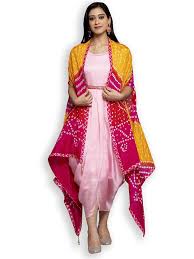
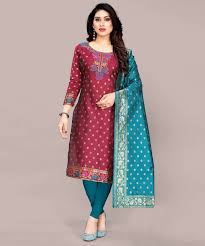
Gota patti

Image source Indiamart

An Indian embroidery technique where small pieces of zari which could be silver or gold ribbons being pasted on to the fabrics and then sewed at the end. A lengthy and time consuming process involves a lot of skilled craftsmanship.


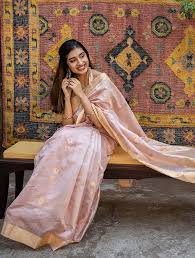
When you look through the crowd at an Indian Wedding, I am very sure that you can find a couple of people wearing garments with gota patti. A traditional Indian embroidery technique that involves stitching metallic strips in gold and silver onto fabric with intricate designs the gota patti is used on saree and lehenga.


Prevalent during the Mughal era, it is believed to have originated in Lucknow. The strips known as zari also is now made with different colors like pastels and other hues. The motifs range from floral to paisleys and can also be geometric or abstract designs. Jaipur, Ajmer, Bikaner, and Udaipur are centers of this amazing art of intricate design weaving.

This post is part of #blogchatterA2Z 2023.

F in Indian women fashion

A term that has been gaining a lot of momentum and traction in recent years is fusion wear. Pairing up traditional costumes with little input from Western styles gives you a unique and modern look. When you are quite bored of sporting the traditional look or the Western formals, this will give you a refreshing look.


We could say it’s the best of both worlds (Indian and Western styles) as it incorporates the beauty of both. A popular twist to fashion is when a woman wants to embrace her cultural roots while still incorporating modern fashion trends.

Image source Amazon


This style became a revolution in Indian women’s fashion such that top brands have even adopted it to bring them into their collections. Though Western wear gained a lot of attention, the ethnic wear segment of garments has repositioned itself as preferred because of the innovative styles, and product marketing the growth trajectory has also seen immense rise.


Image source AJIO

During the early 2000s, the designers started experimenting by using silhouettes from Western styles in traditional ethnic wear. This gave rise to fusion wear, a style blended with the best of both worlds.


Those living in urban areas have adopted the trend of fusion wear. It appears versatile and comfortable in addition to being stylish, it has now become a great choice for everyday wear and also for formal occasions. Its versatility spans such that the attire can be dressed up and dressed down, depending upon the occasion for which it is worn.


An Indo-Western dress wherein a saree or salwar kameez has a Western silhouette or cut that makes it comfortable and stylish has recently gained popularity. The fusion saree is a traditional Indian saree that has Western cuts, and options to drape over a pair of pants.
Fusion wear has even found its way into weddings. From wedding guests to even the bride now chooses to wear fusion wear. The modern and stylish bridal look retains the cultural significance of traditional bridal attire.
This unique and modern style of clothing will gain more popularity as more women embrace this choice of fusion wear.

Image source Indya


A combination of the Ghaghara skirt with a pashmina stole and a cashmere top can never go wrong when it comes to styling. Indian fabrics are given a fresh look with cuts from Europe and the United States giving you a refreshing outlook that can never go wrong.

This post is part of #blogchatterA2Z 2023.

E’ s in Indian women fashion

An essential part of the country’s rich cultural heritage especially when keeping in mind fashion, ethnic wear, and jewelry are things that hit the chord. Especially in a diverse country like India which has a rich cultural history you are limitless with the options you have when it comes to dressing up and following it up with accessories. Let us look at some of the famous ethnic dresses and jewelry in Indian women’s fashion.


When you turn back and look you may notice a wide range of styles, patterns, and designs when it comes to ethnic wear. Be it the fabric, the craftsmanship involved in weaving, the type of occasion whatsoever, you name it, and Tada! You have a dress and a matching accessory. Snap and which land are you in? Well, the answer can be said out loud beaming with pride that it’s India.


From Sarees, salwars, kurtas, lehengas, and half sarees Indian ethnic wear for women has a never-ending list of options. Each of these has a unique charm and adds beauty to the person who wears it.


Saree

Image source pixabay


The saree is a long piece of fabric that is draped around the body and paired with a blouse. Depending upon the place of living, and type of occasion the saree is available in a variety of materials and there is one for everyone. There are silk sarees for weddings, cotton sarees for everyday wear, and georgette sarees for a party. Embellished with sequins or stones the sarees are made to look more grandeur.

Pairing them with different blouses ranging from halter necks to tank tops gives you a truckload of options for fusion wear. Leave the blouse pairing, the type of drape is a whole new chapter that will give you ideas to drape the same saree in about 20+ styles without making people guess that you’re wearing the same thing over and over again.

Wait, and don’t worry if you can’t get the drape right, we Indian women have a solution even for that. We now have businesses that sell one-minute sarees. You just must clip and swish two rounds and be done. You will look like someone who hired a professional to drape your saree. It all becomes so easy that you only have to choose the saree, give them your measurements, and in two days land your Cinderella costume. And for a bonus, some of them even come with customized blouses how cool is that? And if your curves give you insecurity worry not, you have saree shapewear that literally will make you go unrecognizable.

Salwar kameez


A tunic paired with loose-fitting pants makes it a breezy garment. Most women resort to this for everyday wear. It comes in a variety of fabrics and different stitching styles. This can be paired with a dupatta or even a scarf.


Lehenga

Image source pixabay


Predominantly worn for special occasions like weddings, the lehenga is a long skirt paired with a blouse and a dupatta. It can be elegant and luxurious at the same time depending upon the fabric and the amount of handwork that goes into making it. Silk and luxurious fabrics are the most sought materials for a lehenga which is then embellished with stones and sequins.

Ethnic jewellery


An essential part of Indian ethnic wear and no garment is complete without pairing it with jewelry.


The usage of precious metals, intricate designs, and skilful craftsmanship in Indian jewelry is very famous throughout the world. The jewelry includes earrings, bangles, chains, necklaces, rings, toe rings , maang tikkas and anklets.

Image source pixabay


A kundan set that includes earrings, a necklace, and a maang tikka is one of the most famous jewelry forms. Glass stones that are set in gold or silver metal base make it look classy and regal.

Image source Indiamart


A polki set is something similar to kundan except that instead of glass stones, this has diamonds studded, which makes it a perfect wear for special grandeur occasions like weddings. Polki sets are expensive and luxurious forms of Indian jewelry.


Indian women love to wear bangles which are like bracelets that can be made in gold, silver, glass, and lac. They come in a variety of colors and intricate patterns on them can be made to make them look grand.


Indian women also love layering up jewelry. With Short necklaces and long chains, they have a variety of options to style up depending on the neckline of the outfit they wear.
Ethnic wear dresses and jewelry reflect the diversity of our country and its rich cultural history. Indian ethnic wear is loved by women across borders and is cherished by people across the world. Indian women’s fashion is timeless, truly unique, and elegant in its own way.

This post is part of #blogchatterA2Z 2023.

D’s in Indian women fashion

Weddings, festivals, or everyday wear, Indian women’s fashion is an important part of the country’s cultural heritage. From attire to accessories, we can say it is a dynamic industry. Let us look at fashion in D.


Dhoti pants

Image source Amazon

Having its roots in traditional Indian attire, the dhoti salwar is becoming a popular fashion trend. Honoring the cultural heritage but also wanting to have a chic and trendy look, fashion-conscious women have found a way to interpret traditional attire.


Typically worn by men in India, across centuries the dhoti is everyday wear but also makes its way to weddings depending on the fabric with which it is draped. Combining the comfort and fluidity of dhoti but maintaining the structure of a pant, the dhoti pants for women is undoubtedly one of the most versatile garments ever. With an elasticated waistband, it is suited for all body types and can be made in silk, linen, or cotton with vibrant colors and intricate patterns.


Its versatility is boundless that you can pair it with a t-shirt or tank top for a casual look, a kurta, and a heel for a formal look which makes it great for fusion wear. The loose and airy fit is great for the humid climate and makes it easy to move which makes it a great comfort wear.


It can also be layered with a jacket and sweaters with scarves to be worn during winter. So typically, the dhoti pants can be worn all through the year, depending on how you pair them with.


Dupatta

Image source Amazon


A rectangular piece of cloth that is an essential part of Indian tradition, the dupatta can be traced back to ancient India where it was worn for modesty and dignity. Elders considered it as a mark of respect when women wore it over their heads. It also gives an aesthetic appeal and is made from cotton, chiffon, silk, and georgette with intricate patterns embellished with stones and embroidery.


It is an essential component for most Indian attires like salwar, lehenga, and even sarees. It can be draped over the head, or the shoulders and sometimes even as a veil covering the face. While silk dupattas are reserved for weddings, cotton is preferred for everyday wear. It can be plain for everyday wear or embellished with stones or embroidery to give a touch of elegance.


Dhonekali weave

Image source meesho


Originating in the state of Odisha, the Dhonekali weave has a long and rich history that dates to the 5th century rule of Bhaumakara dynasty. Typically used to weave garments for weddings like saree for women and dhoti for men, the dhonekali is a technique that has a distinctive pattern.


Being passed down through generations the weave uses a hand-operated loom and uses a technique called dobby, which involves dobby bars which are wooden sticks to make intricate patterns. It also uses a special yarn katki which is twisted to create a stronger yarn and then dyed with colors to make intricate patterns.


An important part of Odisha’s cultural heritage, it is also a symbol of prestige and status, since it was worn during ceremonies. Not only garments, the weave also found its place in temples as prayer mats and wall hangings.

This post is part of #BlogchatterA2Z 2023.

C’s in Indian women fashion

Being a unique blend of traditional and modern styles Indian women’s fashion has evolved over the years. Intricate designs, craftsmanship, and vibrant colors make it stand out distinctly. Let us take a look at Indian women’s fashion in ‘C’.

Churidar

Image source Flipkart


Originating in North India, the churidar is bottom wear, which is worn with kameez or a tunic. Characterized by its tight fit near the ankle, it uses extra fabric to be gathered around the ankle. A churidar is a versatile outfit that can be worn for both formal and casual events. It can be stitched with cotton, silk, or chiffon and to add that touch of elegance it can be embellished with sequins or embroidery.


A modest and conservative garment that covers the leg, the churidar is loved by women from India, Pakistan, Bangladesh, and other south Asian countries. It is a comfortable and easy-to-move-around attire.

Chanderi silk

Image source Jaypore


Handwoven by artisans in the town of Chanderi, Madhya Pradesh, chanderi silk is a fabric that is a combination of cotton threads and silk. Unparalleled quality, exquisite texture, and intricate designs make it a luxurious fabric that is known for its sheer texture and lightweight that makes it stand apart distinctly.


The soft and delicate feel makes it perfect for weaving comfortable garments. The history dates to the 7th Century, wherein the artisans spun the thread to yarn, dye them with vibrant colors, and then weave them into the fabric. Highly coveted for its intricate design and graceful drape, the chanderi silk often uses zari which is a metallic thread that adds to the glamour of the drape.


Elegant and sophisticated evening wear can be made because of the natural sheen, but since it’s also lightweight, it can be suited to make daily or casual wear garments as well. Such is the versatility of the fabric. The fabric can be woven into sarees, salwar, and lehenga.

Chikankari

Image source meesho


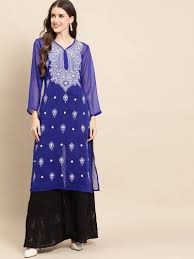
An embroidery technique that comprises intricate handmade designs being stitched onto lightweight airy fabrics is chikankari which originates from the state of Uttar Pradesh. It is a traditional embroidery style derived from the Persian word ‘chikan’ which means embroidery. It is usually done on lightweight fabrics like silk, muslin, and cotton.


Initially brought to India by the Persians, the technique was later adopted by the Mughals who used it to make garments for the nobility who made it an art form, so we could also say that the chikankari art flourished during the Mughal Era. Now it is a widely practiced embroidery technique that is also loved by the general population.


Floral motifs, paisleys, and geometric designs are some of the intricate patterns of embroidery that are done on the fabric. Mostly done in white or pastel colors the light weight of the fabric is the distinct feature of the chikankari which makes it perfect to be worn in summer. Its, crisp finished texture gives it a sophisticated look.


It takes days to finish making a garment because the process is highly labor-intensive because needs delicate embroidery which is one of the reasons that the fabric or garment is on the expensive side.

This post is part of #blogchatterA2Z 2023.

B’s in Indian women fashion


Talking about India’s rich history of women’s fashion, which dates back centuries, the vibrant prints and weaves that originated from small villages still stand leading their way on top of the most sought-after weaves. Not only popular within the Indian subcontinent, but some of these weaves are also considered souvenirs by tourists from across the globe.
Let us look at some of the Indian women’s fashion trends in B.


Bandhani

Image source meesho


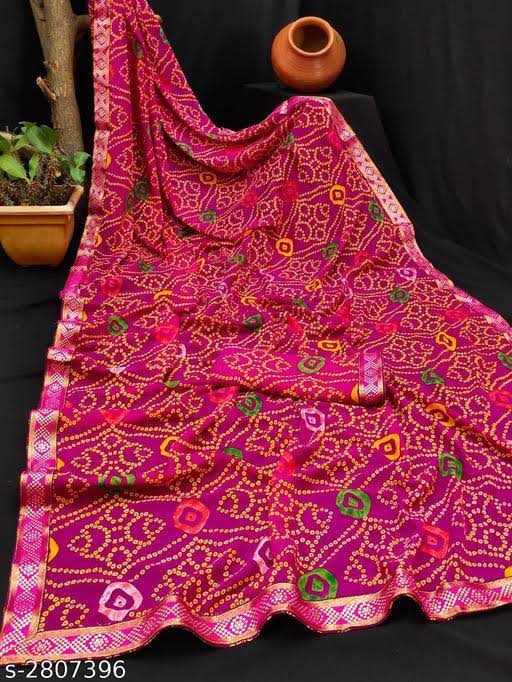
Practiced in India for centuries, the bandhani is the most popularly known as tie and dye which is a traditional textile craft. Tying a small portion of the fabric with thread and then dying them in bright colors results in small circles or dots that form a pattern of intricate designs.
Though Bandhani originated in the state of Gujarat, it is also being practiced in the neighbouring state of Rajasthan. The art of this weave has been passed along through generations and is one of the ways of earning an income. Traditional techniques and natural dyes are still being used for bandhani by many families in Rajasthan and Gujarat.


The unique patterns of dots, stripes, and waves which result in an intricate pattern often vary across the different regions in which this art is practiced. The bright and bold colors used reflect the mood of the occasion for which the fabric would be worn and often vary across geographies and availability of various natural dyes.


Requiring patience, precision, and creativity the bandhani is a highly-skilled craft, which is quite labor-intensive since each dot or circle is individually tied before being dipped in the dye obtained from plants and animals.
The beautiful and intricate textile craft of bandhani which reflects the cultural heritage of India is not only popular in India but also has a fanbase across the world. Designs incorporate modern twists to this ancient craft to adapt to contemporary fashion.


Banarasi silk


Produced in the city of Varanasi, in the Uttar Pradesh state of India, the banarasi silk is a luxurious and most sought-after fabric, that incorporates gold and silver threads that form intricate patterns which makes it one of the most expensive and finest fabrics.


Dating back to Mughal era, where Persian artisans were brought to Varanasi to create weaves for the royal court. The craft evolved over time, with the artisans incorporating local designs and motifs into the fabric. The fine quality, rich texture, and intricate designs make it highly prized among consumers.
The finest silk threads are woven in hand-operated looms which are enhanced using gold and silver threads that give the fabric more shine and luster. From floral motifs to geometric shapes, the threads are intricately woven to obtain desired patterns. Brocade, Zari, and meenakari techniques are used to weave into the banarasi fabric. Used to make traditional Indian costumes like sarees, salwar, and lehengas the banarasi silk is also used to make luxurious shawls and scarves. Often banarasi sarees are passed down as family heirlooms. The fabric is recognized as a geographical Indication(GI) by the Indian Government, which helps in protecting the unique identity of the product and prevents duplicates from being sold in the market.


Bagh and bagru prints

Image source itokri
Image source Amazon


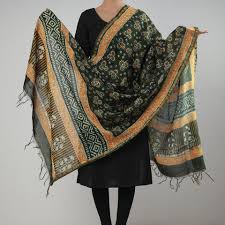
Both these are hand block printing techniques used on fabrics. Bagh has a history dating to 400 years and originated in Madhya Pradesh whereas bagru originated in the Bagru region of Rajasthan. Involving natural dyes for colors and hand-carved wooden blocks for creating intricate patterns, both these techniques are labour intensive since they are done by hand manually.


Once printing is complete, the fabrics are washed to remove excess dyes and fixatives.  The vibrant colors and intricate design on the bagh and bagru print fabrics are inspired by nature and traditional motifs. Both are eco-friendly and sustainable processes that make them a one-of-a-kind fabric.

This post is a part of #blogchatterA2Z 2023.

A’s in Indian women fashion

Dating back centuries, Indian Women’s fashion has a rich history. Be it the intricate designs, vibrant prints, or magnificent weaves, Indian women’s fashion is still evolving and offers a diversified range of styles and trends.
Beginning with A, I decided to pick out two styles and two weaves to discuss Indian Women’s fashion.


Anarkali and Angrakha


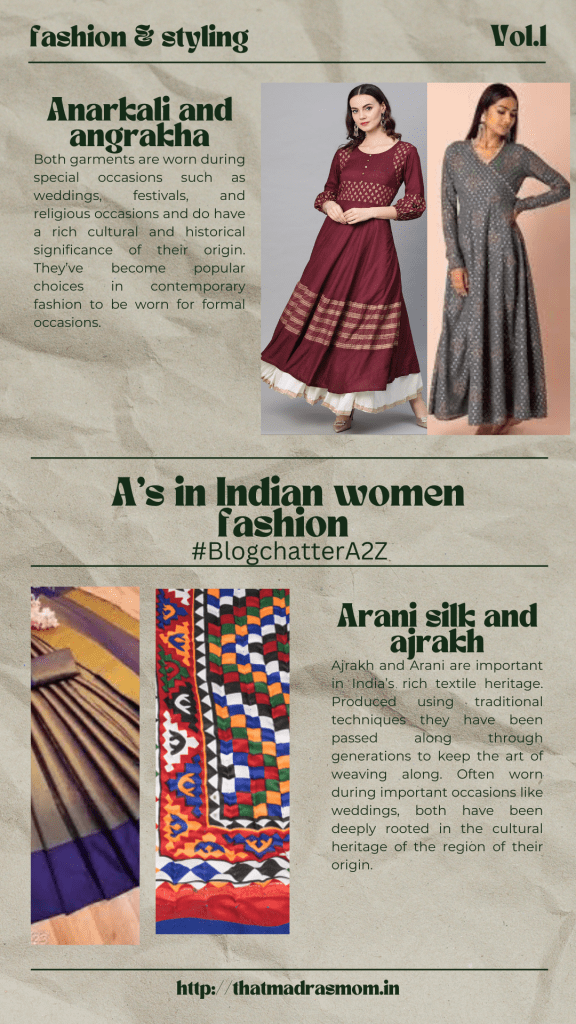
Being around for centuries, Anarkalis and Angrakhas are traditional attire with a rich history and are still in the limelight of contemporary fashion. Having been worn for special occasions like weddings and festivals to now being part of fusion wear, these Indian attires are not going anywhere out of trend.

Image source: Yash gallery


Anarkali, a long flowing dress was named after Anarkali, a famous dancer, and courtesan, who wore this attire when she performed for Emperor Akbar. It is said to have originated in the 16th century during the reign of the Mughals. Flaring out from the waist with a fitted bodice extending to the hips, the Anarkali attire is made of silk. Heavily embellished with sequins and embroidery on the bodice, the sleeves of an Anarkali can either be long or short and are usually made of sheer. It can be worn with a dupatta or as a dress in itself with just a scarf to accessorize or layer.

Image source : myntra


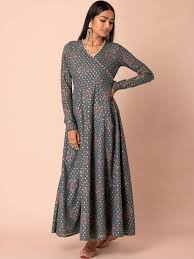
The Angrakha on the other hand, originated in the 18th century in Gujarat and Rajasthan. It was typically designed for men but was later adapted for women as well. Like Anarkali, the angrakha is a flowing skirt that flares from the waist but has a shorter bodice with a slit in the front. It’s usually made with light flowy fabrics like cotton and silk and often embellished with embroidery and vibrant prints for a grandeur look.


Both garments are worn during special occasions such as weddings, festivals, and religious occasions and do have a rich cultural and historical significance of their origin. They’ve become popular choices in contemporary fashion to be worn for formal occasions. Designers have also come up with modern twists making them into fusion wear, wherein the Anarkali can be worn as a floor-length gown and the angrakha is designed with unconventional prints and asymmetric hemline.


These attires have stood the test of time, and women wear them to be in connection with their heritage. Designers have adapted modern tastes giving twists to the attire in contemporary fashion.
This also is proof that these attire will remain popular for years to come and are timeless treasures.


Ajrakh and Arani silk


Known for their intricate designs and high-quality material, the Arani silk and Ajrakh prints are traditional Indian textiles that have been passed down for generations.

Image source : pixabay


Traditionally made, the ajrakh is a type of hand-block printed fabric from Kutch in Gujarat and Sindh in Pakistan. The fabric has been worn by generations of people in that region which dates to 4000 years. Cotton and silk fabrics are dyed with natural colors like indigo and Mudder and printed with intricate designs. It is then washed and dried a couple of times to achieve the desired pattern and color. The result is a fabric known for intricate geometric patterns and vibrant colors.


Considered a symbol of the wearer’s heritage the ajrakh fabric is often worn for weddings and religious occasions. The fabric has a deep cultural significance in the area it is produced. Sometimes used as a traditional remedy for certain ailments, the ajrakh is also believed to have healing properties.

Image source : meesho


Arani silk originates from the town of Arani in Tamil Nādu. Known for its high-quality and durability, it is used to make sarees and traditional attires. ‘Rehwa’, a process that involves twisting two threads to form a stronger, durable fabric is used in weaving the arani silk. The result is a fabric known for its lustre and softness.


Highly sought after for their beauty and quality, the arani silk sarees are worn during weddings, and religious occasions and are even passed along through generations as family heirlooms. Being produced in the Arani town for centuries it is a major part of the local economy.


Ajrakh and Arani are important in India’s rich textile heritage. Produced using traditional techniques they have been passed along through generations to keep the art of weaving along. Often worn during important occasions like weddings, both have been deeply rooted in the cultural heritage of the region of their origin. Prized for their beauty and cultural significance be it the lustrous beauty of Arani silk or the intricate patterns of Ajrakh, people around the world continue to be captivated.

This post is a part of #BlogchatterA2Z 2023.
Outfit ideas for holi 2023

It’s almost time for us to hear ‘ holi hai’ from all around us. Along with sweets, colours the attire for men and women also plays an important role on the holi shopping list.

While you get ready to dance to the tunes of ‘Rang Barse Bheege Chunar wali Rang Barse“, make sure you don’t stay behind in your fashion game. If you still haven’t decided here are some holi outfit ideas that will help you ace the fashion game during holi. Let’s get ready to be drenched in the colours of spring and scream ‘holi hai ‘ .

Sustainable holi outfit ideas

Lohri outfit reuse

If your still not looking to invest in holi outfit, one good way would be to reuse your lohri outfit. If you’ve already spent considerable amount on lohri outfit why not reuse. This would be a great way to save some on your pocket.

The one that Kareena wore in ‘ Jab we met’ is still an inspired for many.

Denim and shirt

Forget the patiala pants, holi is a great time to restyle your denim pants. Pair it up with white shirt and scarf, voila you have a new outfit. Don’t forget to accessorize accordingly.

Image source : Olga de la Cruz Pinterest board.

New outfit ideas

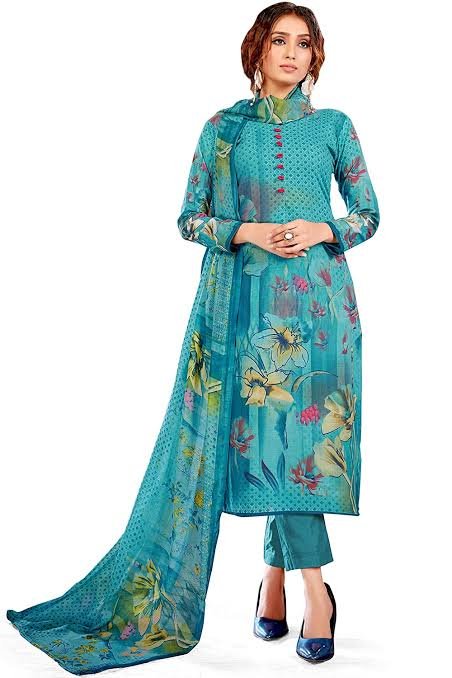
Chikankari suit

The chikankari suit can never go out of trend, especially the one in white for holi paired with a bandhni Or a leheriya dupatta can never go wrong.

This outfit is elegant and classy at the same time.

Image source : limeroad
Image source : nykaa fashion

Floral suit

If your still sceptical to use the white chikankari go for a floral suit. They’re simple but also serve the purpose.

They come in variety of price range and materials which you could choose accordingly.

Image source: amazon

Fusion wear

Now here comes my favorite picks. I love pairing my crop top with a lot of options like Palazzo, skorts. Here’s one

Image source: myntra

The open jacket over the crop top, Palazzo pairing elevates the look.

The beige jumpsuit is yet another favorite that I’m crushing on ever since I was on the lookout.

Image source : myntra

How can you leave skirts and top if your talking fusion wear and especially Indian prints.

Now that we have a list of Holi outfit ideas, let’s talk accessories.

Coolers, sunglasses, goggles

Your eyes need special care during holi, so that you keep them protected away from dry colours, water and dust. Choose one that’s stylish and serves the purpose.

Image source : ajio

Bandanas

Haircare is yet another important area to concentrate during holi. Make sure you cover it with cloth or bandanas.

Image source : ali express

Kolhapuris

Flip flops or open sandals are most comfortable especially with water play. You can also accessorize with kolhapuris. You could also make them grand with tassels.

Ajio

Tips for safe holi

  • Moisturize well, apply sunscreen.
  • Oil hair with coconut+ castor oil, and tie it up.
  • Cover with cloth or bandana.
  • Post play, apply oil on skin before shower to remove colour. Use cleansing balm for face.
  • For hair use comb to remove dry colours.
  • Wash off with regular shampoo and conditioner.
  • Colour might still be there but will go off in subsequent washes.
  • Don’t forget to use a hair mask. The next day.
  • Don’t use heavy makeup for few days.

I’ve repurposed the list from 2022 because these styles still don’t go out of the spotlight. So get ready for the festival of colours in style with this list of Holi outfit ideas and share with your girl gang to rock the party.

Importance of comfort clothing

Opening your wardrobe staring at the pile of clothes for a while and and close it in despair because the sight crushed you when nothing from it would be your outfit of the day. We are either unhappy with the fit or they don’t match our style. The reason being they’re all from a different age of time. Getting dressed up would be no fun if the wardrobe has clothes which don’t fit and match our style.

All the more the fad diet culture will give you the false promise that you might be able to fit into two sizes smaller. We go into the cycle of failure when we don’t fit into the smaller size rather than it was the diet that tricked us into this major havoc and failed us.

Beating the diet culture and getting into intuitive eating will help much here. Having clothes that got you properly will make intuitive eating much easier.

If your clothes are too tight, it might make listening to your body difficult. Also when you not wear clothes which suit body type you are yet again being pushed into the weight loss cycle.

When you feel comfortable in your clothing you might listen to your body better unlike with the distractions with the body squeezing out or not being breathable. Your ease of movement is also important when you wear clothing.

Holding on to diet clothes will keep you encircled in the diet fantasy. So take out clothes from your wardrobe which only scream that they would fit when you lose drastically. It’s time you choose outfits that scream comfort and long lasting.

I recently got a couple of outfits for my better half. Since work from home era is almost coming to end and they might be called back to office sooner, I decided to get some outfits that he could wear to during our quick staycation before the work from home era ends.

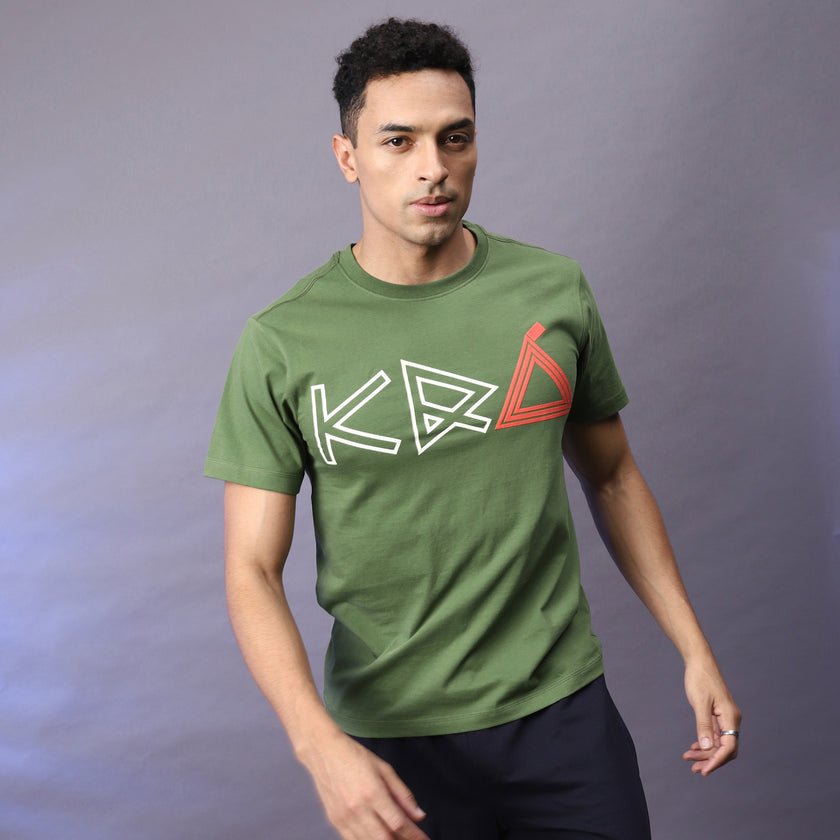
I shopped a couple of streetwear outfits from kra which launched in India. The outfits scream comfort and casual and streetwear has been on the game until now.

YouTube sensation beyounick partnered with kra and launched the fashion range, which made streetwear range unabashed and unrestricted.

Source : thisiskra

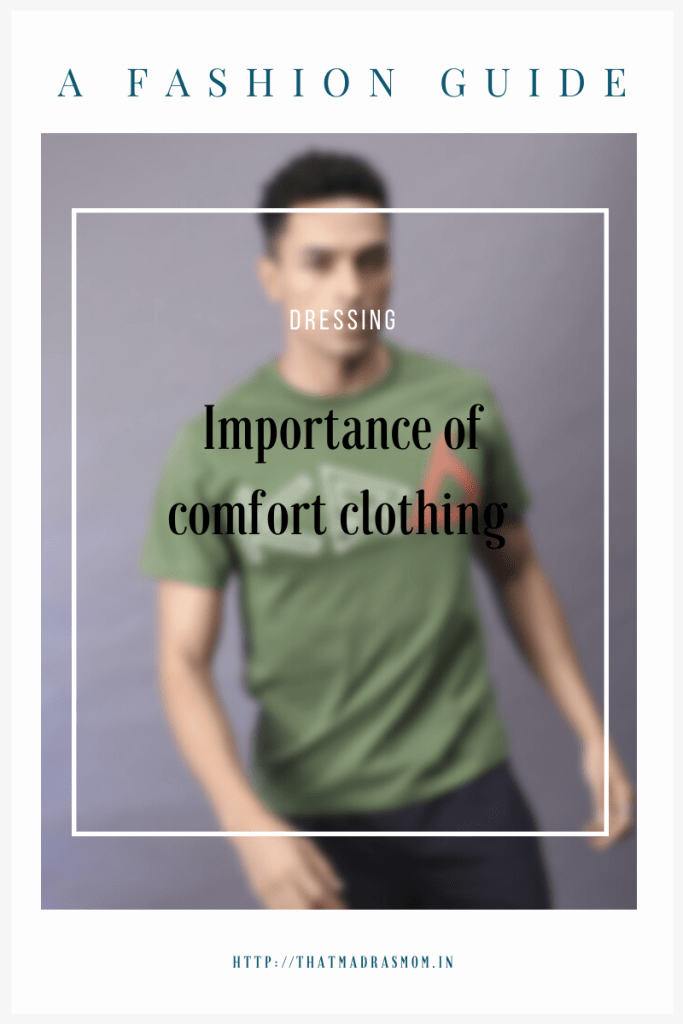
Purchased this super cool olive green tee that screams kra and all the more is pure cotton so comfort is totally guaranteed. This piece is great for stroll, jog , meet up with friends or even to office during casual wear days.

The brand also caters to outerwear and bottom wear which were equally good when it comes to comfort. The quality was top notch.

Being a person who looks for comfort first before fashion ,I was glad that I could add some to his comfort clothing wardrobe.

This blog post is part of the blog challenge ‘Blogaberry Dazzle hosted by Cindy D’Silva and Noor Anand Chawla.’

Outfit ideas for holi 2022

It’s almost time for us to hear ‘ holi hai’ from all around us. Along with sweets, colours the attire for men and women also plays an important role on the holi shopping list.

While you get ready to dance to the tunes of ‘Rang Barse Bheege Chunar wali Rang Barse“, make sure you don’t stay behind in your fashion game. If you still haven’t decided here are some outfit ideas that will help you ace the fashion game during holi.

Sustainable outfit ideas

Lohri outfit reuse

If your still not looking to invest in holi outfit, one good way would be to reuse your lohri outfit. If you’ve already spent considerable amount on lohri outfit why not reuse. This would be a great way to save some on your pocket.

The one that Kareena wore in ‘ Jab we met’ is still an inspired for many.

Denim and shirt

Forget the patiala pants, holi is a great time to restyle your denim pants. Pair it up with white shirt and scarf, voila you have a new outfit. Don’t forget to accessorize accordingly.

Image source : Olga de la Cruz Pinterest board.

New outfit ideas

Chikankari suit

The chikankari suit can never go out of trend, especially the one in white for holi paired with a bandhni Or a leheriya dupatta can never go wrong.

This outfit is elegant and classy at the same time.

Image source : limeroad
Image source : nykaa fashion

Floral suit

If your still sceptical to use the white chikankari go for a floral suit. They’re simple but also serve the purpose.

They come in variety of price range and materials which you could choose accordingly.

Image source: amazon

Fusion wear

Now here comes my favorite picks. I love pairing my crop top with a lot of options like Palazzo, skorts. Here’s one

Image source: myntra

The open jacket over the crop top, Palazzo pairing elevates the look.

The beige jumpsuit is yet another favorite that I’m crushing on ever since I was on the lookout.

Image source : myntra

How can you leave skirts and top if your talking fusion wear and especially Indian prints.

Now that we have an idea about outfits, let’s talk accessories.

Coolers, sunglasses, goggles

Your eyes need special care during holi, so that you keep them protected away from dry colours, water and dust. Choose one that’s stylish and serves the purpose.

Image source : ajio

Bandanas

Haircare is yet another important area to concentrate during holi. Make sure you cover it with cloth or bandanas.

Image source : ali express

Kolhapuris

Flip flops or open sandals are most comfortable especially with water play. You can also accessorize with kolhapuris. You could also make them grand with tassels.

Ajio

Tips for safe holi

  • Moisturize well, apply sunscreen.
  • Oil hair with coconut+ castor oil, and tie it up.
  • Cover with cloth or bandana.
  • Post play, apply oil on skin before shower to remove colour. Use cleansing balm for face.
  • For hair use comb to remove dry colours.
  • Wash off with regular shampoo and conditioner.
  • Colour might still be there but will go off in subsequent washes.
  • Don’t forget to use a hair mask. The next day.
  • Don’t use heavy makeup for few days.

‘This blog post is part of the blog challenge ‘Blogaberry Dazzle’ hosted by Cindy D’Silva and Noor Anand Chawla in collaboration with RRE Studios and ShowCase Events.’