What is potty training ? When and how to start ? Do’s and dont’s

What is potty training?

Potty training is training your toddler to use potty, so he/she can get rid of wearing diapers.

What the best age to start potty training?

Healthy children aren’t physically and emotionally ready to start using a potty until they are between 18 months and three years old. Boys tend to be ready a few months later than girls. Most parents start the training when their children are between two years and three years old.

The physical maturity and readiness skills needed for successful toilet learning appear at the same time in girls and boys-between 18 and 30 months of age. The average age for girls to be toilet trained is 29 months, and for boys it’s 31 months.

Please note these are just the average months and not exact.

Age shouldn’t be the deciding factor in beginning potty training.

This varies individually among each child and is something that needn’t be compared to.

The key is making sure your child is physically and developmentally ready

How do you know that your child is ready to be potty trained?

· Pulling a wet or dirty diaper.

· Hiding to pee or poop.

· Interest in others’ use of the potty

· Copying adult potty behavior.

· Having a dry diaper for a longer-than-usual time.

· Awakening dry from a nap.

· Telling out that they’re about to go, are going or have just gone in their diaper.

Bowel or bladder control? What comes first?

Most children achieve bowel and bladder control between 24 and 48 months of age. Bowel control occurs before bladder control.

Sequence of control

· Bowel control at night

· Bowel control during the day

· Bladder control during the day

· Bladder control at night

It is normal to wet the bed until age six for a girl and age seven for a boy.

Steps to train your toddler

· Let them watch and learn – Show them how it is done ie. How to undress and sit.

· Buy the right equipment – Getting the right type of potty seat plays a vital role in your training. Try going for choices which would make the kid want to come back and not whine, when taken.

· Help your child get comfortable with the potty – make sure the child feels comfortable sitting on it.

· Motivate with cool underwear- Make them wear underwear with their favorite cartoon characters or motifs. Make them wear it without fuss.

· Set up a training schedule- Prepare a schedule, and stick on to it. It will slowly become a routine.

· Teach to sit and wipe- Help them sit on the potty or if you are using a toilet seat cover, make sure its sturdy when they sit.

· Set aside some naked time – Give them some diaper/ underwear free time. So that they will feel the urge when they need to pee/poop.

· Celebrate triumphs – Once they start doing it the right way, keep encouraging them with small treats.

Role of book and videos in potty training:

Everyone Poops, by Taro Gomi, is a lasting favorite. Where’s the Poop? and Once Upon a Potty, comes in a version with a doll and miniature potty. Potty by Leslie patricelli is another good book.

Several board books are now available to encourage children and make them learn in a fun way.

Gender specific titles are also available.

You could also show them an animated video, showing them how their favorite character also is being potty trained.

Many parents deal with potty training as something over which they have total control. Parents are a big contributor to their child’s development, but they don’t really control it. Parents are there to facilitate, to guide, to reinforce and to praise, but parents shouldn’t put pressure on themselves that if they do a series of steps, the children will achieve a certain outcome.”

If you feel like you’ve been changing diapers forever, you’re not alone.

Do not compare your child, this varies individually and is not something to boast about if your child has mastered it very early. Children take their own time to get comfortable and used to it. After all, its nature’s call and cannot be missed but would be taken at the right time and right place.

When does a child start talking ? What to look for and when to seek help ?

The most demanding period for acquiring speech and language skills is the first 3 years of life, when the brain is developing and maturing. These skills are best developed in a world that is rich with sounds, sights, and consistent exposure to the speech and language of others.

There are certain critical periods for speech and language development in infants and young children. This is the period when the brain is best able to absorb language. If these periods are missed without exposure to language, it will lead to learning difficulties.

Milestones for speech and language development

When an infant learns that a cry will bring food, comfort, and company that is when the first signs of communication occurs. Newborn babies begin to recognize key sounds in their environment, such as the voice of their mother or primary caretaker. Babies begin to sort out the speech sounds that compose the words of their language as they progress in growth. Most babies recognize the basic sounds of their native language by 6 months of age.

The development of speech and language skills in children differs. They follow a natural advancement or timetable for mastering the skills of language. There are certain milestones which help doctors and professionals determine if a child is on track or if the child may need extra help. Sometimes a delay may be caused by hearing loss, while other times it may be due to a speech or language disorder.

How to nurture your baby’s language development?

1. Talk, talk, talk. …

2. Read, read, read. …

3. Enjoy music together. …

4. Tell stories. …

5. Follow your child’s lead. …

6. Never criticize your child’s articulation or speech patterns. …

7. Use television and computers sparingly. …

8. Treat ear infections thoroughly.

Language development varies considerably between children, even within the same family. However, they tend to follow a natural progression for mastering the skills of language and there are certain ‘milestones’ that can be identified as a rough guide to normal development.

Children develop their speech at an individual rate but there are certain milestones to be aware of.

Development of speech over time

Babies need to learn how language sounds before being able to learn how to speak.

Although children improve at their own rate, there are some general patterns:

  • From 1-3 months of age, babies cry and coo
  • At 4 to 6 months of age, babies sigh, grunt, gurgle, squeal, laugh and make different crying sounds.
  • Between 6-9 months, babies babble in syllables and start imitating tones and speech sounds.
  • Between 12 months, a baby’s first words usually appear, and by 18 months to 2 years’ children use around 50 words.
  • Between 2-3 years, sentences extend to 4 and 5 words. Children can recognize and identify almost all common objects and pictures.
  • Between 3-5 years, conversations become longer, and more abstract and complex.
  • By the time a child turns 5, they usually have a 2,500-word vocabulary and talk in complete, grammatically correct sentences. They ask a lot of ‘why?’, ‘what?’ and ‘who?’ questions.

How can parents help?

  • making faces and noises and talking about your activities from the day they’re born
  • playing interactive games like peek-a-boo and singing nursery rhymes
  • looking at books from an early age – you don’t have to read the words, just talk about what you can see
  • talking slowly and clearly and using short, simple sentences.
  • avoiding testing, such as asking ‘What’s this?’, as children learn better without pressure
  • not criticizing wrong words and instead saying the word properly – for example, if your baby points to a dog and says ‘do!’ say: ‘Yes, it’s a dog
  • letting your child lead the conversation and help them expand on their thoughts
  • giving your child lots of opportunities to talk, with plenty of time to answer your questions

Who is a late talker?

A “Late Talker” is a toddler (between 18-30 months) who has good understanding of language, typically developing play skills, motor skills, thinking skills, and social skills, but has a limited spoken vocabulary for his or her age.

When to seek medical help?

  • By 12 months, your child is not trying to communicate with you (using sounds, gestures and/or words), particularly when needing help or wanting something
  • By 2 years, your child has not started combining words.

If your child hasn’t mastered most of the speech and language development milestones for his or her age or you’re concerned about any aspect of your child’s development seek help immediately. Speech delays occur for many reasons, including hearing loss and developmental disorders. Depending on the circumstances, your child’s doctor might refer your child to a hearing specialist or a speech-language pathologist.

In the meantime, talk to your child about what you’re doing and where you’re going. Sing songs and read together. Teach your child to imitate actions, such as clapping, and to say animal sounds. Practice counting. Show your child that you’re pleased when he or she speaks. Listen to your child’s sounds and repeat them back to him or her. These steps can encourage your child’s speech and language development.

Encouraging your toddler to talk

Talk to your toddler as much as possible as you go about your daily routine and when you are out and about. The more you talk to your toddler, the newer words she’ll learn, and the better she’ll get at talking.

Chat to your toddler as you change diapers, feed, or bathe her. But make sure you give give her time to respond with a smile or eye-to-eye contact. Use everyday activities to help your toddler to make connections between actions and objects and the words that represent them. Point out things you see when you’re out and about.

Simplify your speech when you talk to your toddler. Use short sentences and emphasize key words. This will help your toddler to focus on the important information.

Try talking to your toddler from time to time in sentences that are about one word longer than the sentences she is using. So if your child uses two-word sentences, use lots of three-word and four-word sentences when talking back to her. For example, if your toddler says “a bird”, you could say, “yes, a big bird.”

You can increase your child’s vocabulary by giving her choices, such as “Do you want an apple or a pear?”. You could even show your child both an apple and a pear. This helps your toddler to store a picture of the word in her mind.

It will help your toddler to learn how to talk if you make time to sit in front of her and talk to her. You could even sit in front of her when you read a book, rather than have her on your lap, so she can watch you talking.

Look at books with your toddler regularly. Even if you don’t follow the story as it unfolds, your toddler will learn by listening to you talk about the pictures.

I recently came across a site that helps you check if your child is on track. http://www.talkingpoint.org.uk/

They have different choices of months which can be selected. It’s basically a quiz for the parent with their child’s development.

So mommies get going and do the talking.

Are you still breastfeeding ? When to start with BLW ??

Hello Mommies,

March 13 2017 was the day I met my little angel who gave me a second life. The labor and delivery was a scintillating experience for me as a first time mommy. All throughout my pregnancy, I constantly kept myself occupied reading about the various ways people enjoyed being pregnant. I followed fellow blogger mommies who had different views on everything relating to pregnancy. Right from the tests, scan, food, workouts, and leisure time; my choices were abundant and I had plenty to choice from.

But, the one thing that was constantly running in my subconscious mind- VAGINAL DELIVERY and BREASTFEEDING.

That is also the time I started reading about breastfeeding. I also got to know there were classes for learning about various positions to feed the baby and that can be taken even before the delivery. There are also few hospitals who offer this as part of their package to expecting clients. Well, living in the 21st century, this is not something to be surprised of. This would not have been possible for our ancestors- say even our moms.

When I told my mom about this, she found it interesting and gave me a go ahead. Though we do have the elders guiding us through their experiences, they still agree on things like these.

A breastfeeding class can introduce us to some of the different positions and offer some reassurance that breastfeeding is not something that’s going to happen immediately. Baby and us are both going to need some time to get the hang of it.

The ‘Womanly Art of Breastfeeding’ is a wonderful book to start with, in case you do not have time to attend to classes.

These classes teach us about the different latches, feeding cues, and stomach size.

It is very important to get the first latch properly. This is done immediately in the labor room. My God, I really felt I was in heaven when I felt her lips. What more does a mother want?

And ladies, in case you are attending the classes birthing/ breastfeeding don’t forget to take your husbands. It is extremely necessary they accompany us, not just as moral support, but to get to know and be supportive.

I initially had little struggles with making my daughter feed, I was very worried about it. But, I did not give up. The main thing to focus during this time is not to fall into depression and not to lose hope. I strongly kept saying within me that I can feed my baby, I can satisfy her hunger needs, and I can do it. This positive vibe really did wonders, and slowly I starting seeing changes and feeding time became relaxing for both, me and my baby. Feeding with keeping the baby in the baby carrier was another blessing in this era. Though feeding in public is still a big “WHAT THE” in this society making a lot of heads turn, the carrier made it easier.

As the months passed, I noticed that she needed much more than only milk. That is when I decided to wean. I started with porridge and fruit purees. She had an instant liking. We can start this once the head gets the support and the baby can balance the head-neck. Apple purees, finger millet, and rice porridge were becoming her favourites.

SO, what is BLW or baby led weaning then?

We can start letting the baby taste and feel the textures by giving them small portions. Self-feeding improves hand-eye coordination. Baby learns to swallow, lick, and chew. Once the baby starts sprouting the first tooth, we can offer finger foods like carrots and beans. Take care to not feed nuts/peanuts as it may lead to choking.

Eating with the family is a great practice that can be cultivated as early as 8 months. The baby can watch others eat, so that they get to learn what and how.

And ladies, you can still continue breast feeding until the child is one. Nobody can stop you from that!

Related read : Baby led weaning.

I’m proud and happy being a working mom. Should I feel guilty? Hell no!!

Our life as we know it, is not a bed of roses. It has thorns or hardships too.

Waking up early is hard.

Studying is hard.

Getting good grades in hard.

Maintaining a healthy lifestyle is hard.

Being a responsible worker after graduation is hard.

Finding a good partner and getting married is hard.

Conceiving at the right time is hard.

Bringing up a healthy baby in the womb until delivery is hard.

Let me come to the point.

Being a mom is hard.

Being a stay at home mom is hard.

Being a working mom is hard.

Being a human is hard. Come on that doesn’t sound worse.

We can accomplish tasks that are termed hard.

I pushed a little human out of a lemon sized hole in my body. That was hard and yes I did it.

I am doing a great job. And my kid will turn out just fine despite the hours I spend away from her.

So what did I do here?

I was lucky enough that the maternity Bill here in India got passed jus few days after my delivery. So I get to enjoy six months of paid maternity leave. Perks of working in a MNC ;).

I also made a decision that I would exhaust the Maternity Lop as well since I wanted to be with my daughter in all her monthly milestones. That decision I made gave me immense pleasure that I was there when she rolled over, tried to lift her head up, sat, try to stand, try to walk, say her first words, start taking solids. Me staying back home after paid maternity leave raised eyebrows even among my close circle but to me I chose what is best for me and my daughter. Happy that I had a supporting family who were all ears when I announced I would join back after a year.

I am now a working mom which likely means leave the house every day feeling guilty about my decision to be a working mom. “Am I selfish for abandoning my child?” ” “Are all the stay at home moms right?” Wait. Wait. I stopped the second-guessing and gave a pat on my back for making a decision that I very likely know is best for my family.

Instead of being racked with senseless guilt, read along to know why I feel fantastic about being a working mom.

CAREER GROWTH AND FAMILY GO HAND IN HAND

It feels great to be working for a company that values family in conjunction with career. According to me there is no either-or when it comes to career and family. It’s both. Professional growth and parenthood are both important and I do not draw a stark line between them. I can’t be perfect at both. I learnt this quick, which gave me a peaceful mind.

BEING A PARENT MAKES ME A BETTER PERSON

There’s another side of me I hadn’t discovered if I did not have my daughter—and it’s one of the better sides. No other experience in life could have taught me that I’m capable of loving and nurturing another person to such great lengths.

SHOUT OUT FOR HELP AND SHARE RESPONSIBILITY

Mom and Manger are the same— but different teams. Handling both is a key reminder that running a house isn’t very different than managing a team. Which means the moral is that moms are supposed to be 100% in charge of the cooking, organizing, planning, feeding, everything, is not only unfair, but false. Imagine if our manager did ALL the work, or if your supervisor wanted to lead every single project. At office, we need other people to be creative, meet deadlines, and execute on strategy; remember that we are not alone. So why do we constantly think moms should?

Working full-time has been an opportunity to change the usual game and make it level for both genders. Both me and my husband have an equal share of all the work at home and that includes making the baby sleep and not to forget diaper changes.

I CAN AFFORD A LITTLE LUXURY

My idea of heaven is an hour-long massage followed by a refreshing bath. The fact that I bring money into the house makes me feel better about the occasional reward I hand down myself. Staying home is no less taxing or tiring than going to work—and probably more so—but when we earn an income, we don’t have to ask anybody’s permission to indulge ourselves now and then.

I don’t have insecurities about working full-time, and I know I’m fully present for the hours I’m with my daughter. As she grows, I want her to witness first-hand what it looks like to fully involve yourself into personal goals and a concrete family life. But if I didn’t work full-time, I would still care deeply about teaching her the importance of diligence, dedication, and heart.

So mommies get going, there is a whole new world out there just waiting for you.

World book Day challenge prompt 7 : Colours or Rainbow

The more that you read, the more things you will know. The more that you learn, the more places you’ll go.”~ Dr. Seuss

T

here are many little ways to enlarge your child’s world. Love of books is the best of all.
~ Jacqueline Kennedy

Posting for #worldbookdaychallenge day 6 prompt colors/ rainbow.
Recognition of colors can provide children with essential learning tools in life. As kids learn to identify colours and use colour as a language tool to describe things, it develops and strengthens their ability to communicate effectively.
Teaching our child about colour (hurs, shades and tones) we will also be helping them to use colour as a means of creative expression in all aspects of life.
They will learn to use colour as a visual cue to identify danger (red) and distinguish hot from cold.
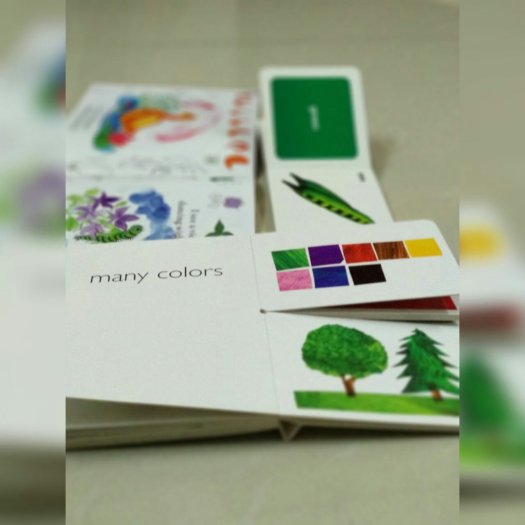
The books I chose for this prompt and the ones I used to teach colors to Cheeni are @ericcarl my first book of colors , @prathambooks colors of nature and look and learn colors of creative publications.
These books have beautiful illustrations for each color so that it is easier for the child to grasp.
Cheeni now identifies few colours like blue and red.
My first book of colors is a mix and match book where we could mix and match colors and the objects.

World book day challenge day 5 prompt Vehicles

I

will defend the importance of bedtime stories to my last gasp.
~ JK Rowling

Posting for #worldbookdaychallenge day 5 prompt : Vehicles
This is the only prompt for which I had no book sadly. As told in previous post wheels on the bus could have also been a choice here but no luck yet.
But to my surprise the hosts also clarified that the prompt Vehicles could also mean a journey.
And so what book do I post here ??
I’m not sure if it was luck or coincidence here, I stumbled upon an Instagram page called @starandread, who make personalised books for kids.
I decided why not give this a try , a book on Cheeni’s name where she gets to be the main character. It sounded cool, I immediately logged on to their website and checked it out.
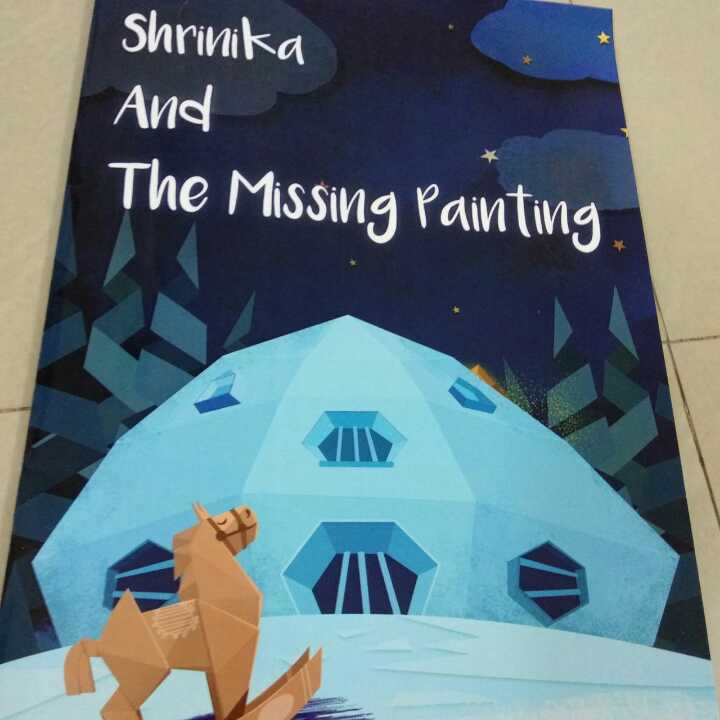
They give you an option of stories which you want to choose for your kid. I choose the missing painting, featuring my daughter Shrinika.
Also that they had a combo offer running that period when I ordered, the personalised hardcopy and ten ebooks were for RS.499 isn’t that a steal deal. I immediately ordered that for Shrinika. To my surprise the book got delivered yesterday when I was actually bit upset that I had no books for vehicle theme.
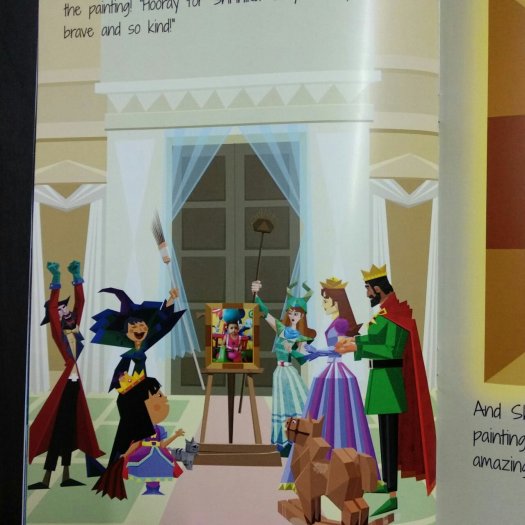
Let’s get to the story. It’s about princess Shrinika, who goes on a journey to get back her magical painting which was gifted to her by her parents (The King and the Queen). Ahemm. That’s actually me and my hubby.
Shrinika travels on a magical horse called hoiho which was given to her by the good witch.
Shrinika sets on a journey across the world in search of her painting which were thrown away into pieces at different parts of the world.
She travels across the pyramids, oceans, South pole, caves and finally to the bad witch’s house where she finds the final piece.
She even helps a baby penguin lost in the oceans to reunite with it’s parents in the South pole.
She shows great courage to find the painting when she had to enter caves with mysterious creatures.
The book in a way teaches the kid act of kindness , bravery, courage and forgiveness.
So what are you waiting for, order yours @starandread.
The book has book has colourful illustrations which are eye-catching.
What Cheeni loved
* Seeing the magical painting.
*The colourful places across the world beautifully illustrated.
* Her very own story with her mom and dad

World book day challenge day 4 prompt : Nursery rhymes

B

ooks are a uniquely portable magic.
~ Stephen King

Posting for world book day challenge day 4 prompt : Nursery rhymes
This is my most favorite prompt in this contest. I would have definitely gone with ‘ Wheels on the bus ‘ but I am yet to get a book for the song. I am not impressed with the ones on Amazon. Everytime I try to block when it’s posted on preloved book pages on Instagram someone else blocks before me, so I’m just waiting on this one.
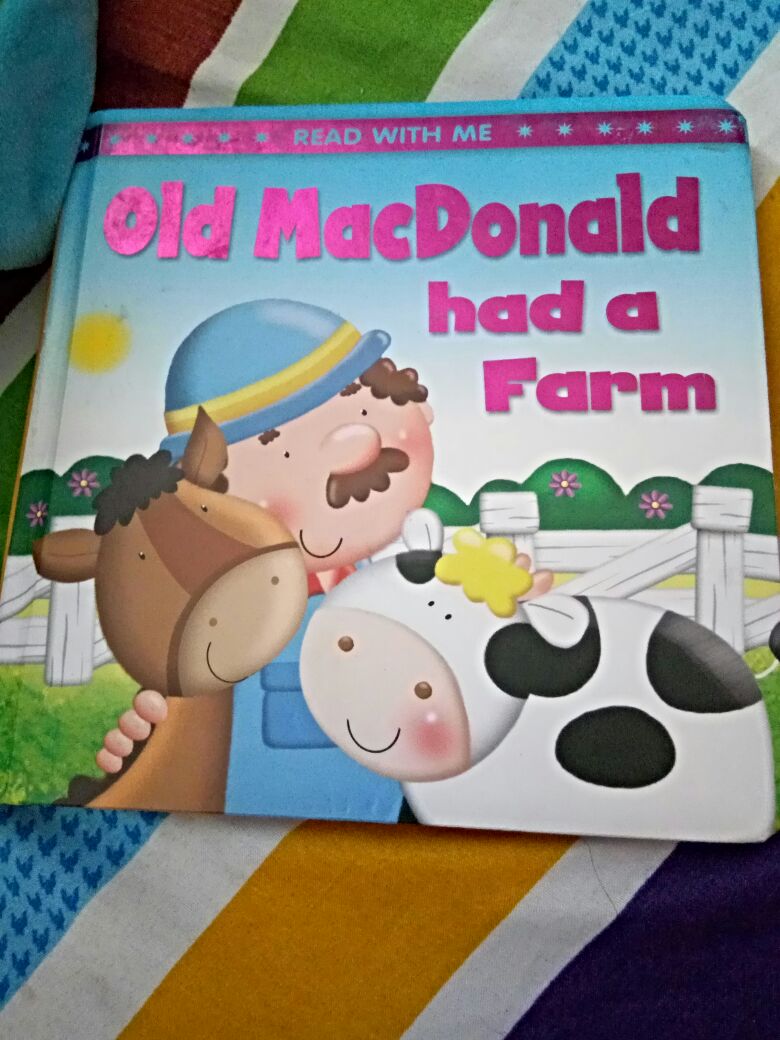
But definitely next on the list is ‘ Old McDonald had a farm EIEIO ‘.
Whenever the song is been played on being sung Cheeni immediately starts singing Ee Aa Ee Aa . How sweet is that. Not only that she also runs to get this book to you to read it out for her.
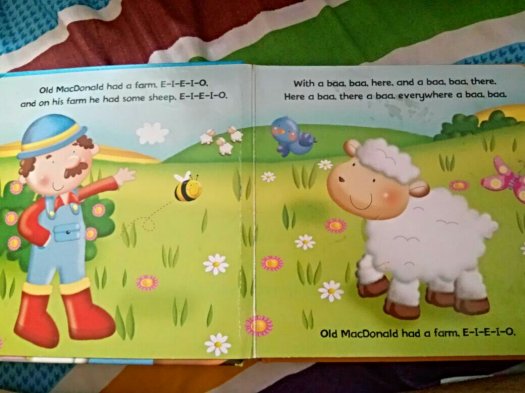
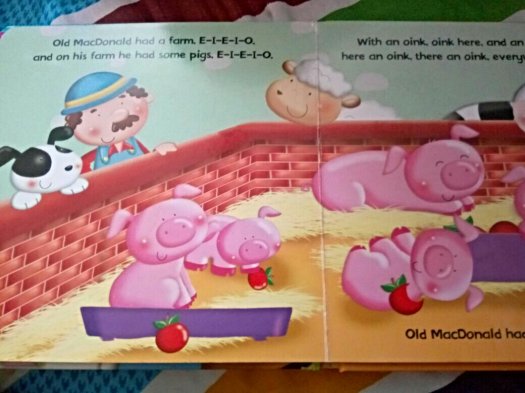
The rhyme is about a farmer and the animals he keeps in his farm – the chick, the duck ,the dog ,the cat ,the sheep, the cow, the horse and the pig.
The lyrics are catchy , with the animal sounds moo, baa, bow wow ,meow , neigh ,oink, chick and quack.
We recently got few magnets of animal set from @ishvadesigns which made this rhyme learning even more easier and fun.
Cheeni brings these magnets from fridge making these animal sounds when we sing.
What Cheeni loved about this book
* The colourful pictures of animals
* It’s small and handy for her to hold it and dance.
This book was also from @sunshinebooks.

World book day challenge day 3 prompt : Childhood

So please, oh please, we beg, we pray, go throw your TV set away, and in its place you can install, a lovely bookshelf on the wall.
~ Roald Dahl (Charlie and the Chocolate Factory)

P

osting

for #worldbookdaychallenge day 3 prompt : Childhood
I’ve been brought up as an early reader myself. The first few of the books that I was given were the ones of Helen Oxenbury. She is a great illustrator and writer of Children’s picture books. I can , I hear , I see , we are going on a bear hunt , all fall down, clap hands to name a few.
But my most favorite was ‘ Tickle Tickle ‘ by her.
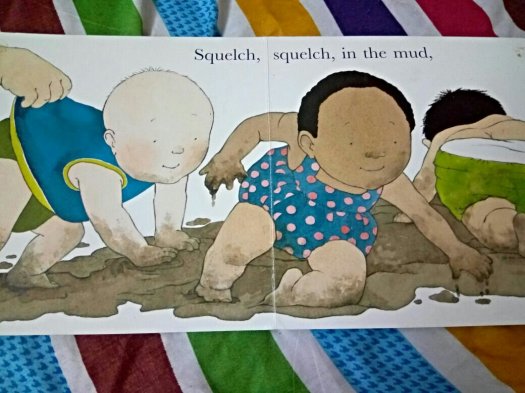
The book has very few pages but illustrated with cute kids on all .
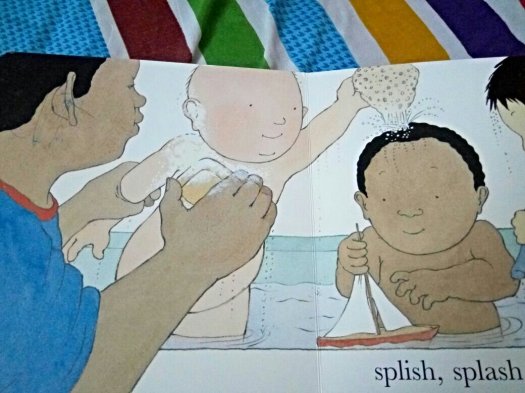
The book goes about how the children play in mud, take a bath, get ready for bed and time for Tickle Tickle.
She is very well known for her soft color illustrations which definitely is a must for toddler books.
On a sad note, the books I owned couldn’t be retrieved from what was left after the December 2015 Chennai floods.
But when I came to know that @thelittlebookhub had a preloved copy of this wonderful book, I never had second thoughts and immediately blocked it so that I could hand down the same emotion I had with that book to Cheeni.
Cheeni loves looking at the kids on the book and when I say Tickle Tickle she starts giggling. So this book is definitely apt for the prompt : Childhood . I hope to pass this on to my grandchildren as well.

World book day challenge day 2 prompt : Favorite

B

ooks are not made for furniture, but there is nothing else that so beautifully furnishes a house.
~ Henry Ward Beecher

Posting for day 2 of #worldbookdaychallenge
Prompt : Favorite
Cheeni’s most favorite currently of all the books she owns now is ” Is this my nose?” Smile into the mirror By Georgie Birkett.
This wonderful book could be your toddlers very first book.
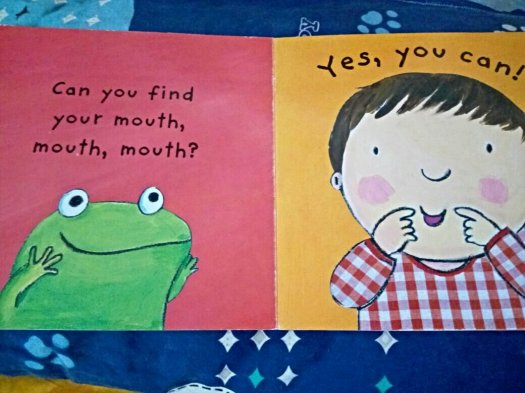
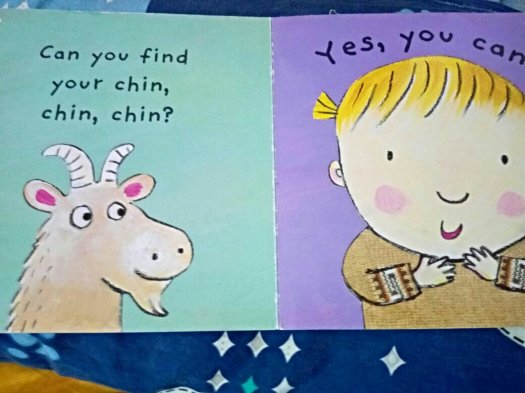
Yes it was for Cheeni. The book has colourful pictures of kids showing various parts like eyes, nose, mouth, ears and chin.
Not only that the book also has a flap mirror on the last page for the baby to look at themselves.
Each page of the has an animal and a kid on the other page pointing out the various parts.
The last page just shows all of them put together just like a summary of what of shown in the book entirely.
The book is written in a style that the toddler is being asked is this your nose/eyes/ears/mouth/chin ? And answered yes.
The mirror definitely is a surprise element here. But the only concern here being it’s a flap mirror it was sadly ripped off in one or two days we received the book.
Georgie Birketts books are known for simple writing style and casual illustrations.
Made me find out that there were more of his works that needed to be included in Cheeni’s library.
Some of them are A for Apple, 123 count with me, grow it, fix it, cook it, clean it and the big night book.
What Cheeni loved
*The cute kids showing their parts
*The flap mirror that was pulled out sooner
What Cheeni learnt
*The various parts illustrated in the book
Cheeni now brings this book from her reading corner when you say ” nose book”. Cheeni now is able to point out to parts when called out just like the kids in the book.

World book day challenge day 1 prompt : Earth

A book is a garden, an orchard, a storehouse, a party, a company by the way,

a counselor, a multitude of counselorrs.

~ Charles Baudelaire

Posting for the prompt #1 of #worldbookdaychallenge Earth.

What more describes the life on Earth than our very own Eric Carl’s The very hungry caterpillar.

This beautiful book depicts the life of a caterpillar evolving into a butterfly. Cheeni learnt the days of the week, numbers, colors and what not.

Here is what was the inspriation for this book in his words: “One day I was punching holes with a hole puncher into a stack of paper, and I thought of a bookworm and so I created a story called A Week with Willi the Worm. Then later my editor, who didn’t like the idea of a worm, suggested a caterpillar and I said “Butterfly!” And the rest is history.”

The life cycle is beautifully written down and illustrated the egg , the caterpillar, the cocoon and the big butterfly.

Did you know the book was first published in 1969, that’s when our parents were studying. And it is still selling over 49 million copies worldwide and is being translated over many world languages.

The book also has bright pictures of sun, moon ,leaves ,food which makes it even more interesting for kids .

This made me discover a lot more of Eric Carl’s book to introduce to her.

Cheeni loves it when I read it out loud to her. She recognizes sun and the moon now.

What Cheeni loved

* The big pictures

* The colours

* The way it’s illustrated.

She now knows numbers, colors, sun, moon.

Kids these days are more interested, given the choice of books they have and their types.