I in Indian women fashion

The Indian fashion industry not only comes up with new ideas but also revives traditional wear by adopting techniques in cuts and giving the outfit a new dimension. The weaves from yesteryear are great fabrics for modern wear today.


Let us look at trends in I.


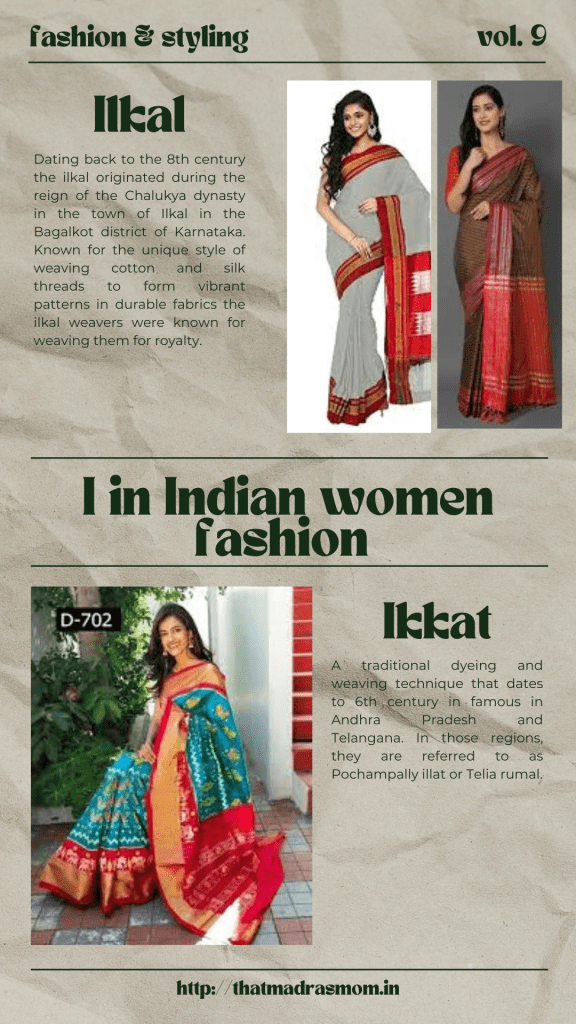
Ilkal weave

Image source Amazon


Dating back to the 8th century the ilkal originated during the reign of the Chalukya dynasty in the town of Ilkal in the Bagalkot district of Karnataka. Known for the unique style of weaving cotton and silk threads to form vibrant patterns in durable fabrics the ilkal weavers were known for weaving them for royalty.


The garment had intricate designs and patterns, which followed the ilkal weave evolving by incorporating elements from neighboring regions. Temple silk is the special yarn that is used for weaving which gives stiffness and makes it easier to weave. The pit loom allows the weaving of complex patterns and designs which makes it unique.


Bright and bold colors like red, green, and gold are predominantly used for ilkal weaving. The weaving is a time-consuming process that begins with the preparation of the yarn. The cotton and silk threads are prepared separately, wherein silk is treated with starch to get stiffness. The two threads are then weaved together through weft and warp techniques in the pit loom.


The resulting Ilkal fabric is durable and is resistant to wear and tear. The fabric is also known to retain color and shape therefore has a long life and is one of the reasons that it is most sought-after.


As long as there are skilled ilkal weavers, it will continue to thrive and mesmerize us with its vibrant beauty. Ilkal sarees are passed across generations as family heirlooms.

Ikkat

Image source Indiamart


A traditional dyeing and weaving technique that dates to the 6th century is famous in Andhra Pradesh and Telangana. In those regions, they are referred to as Pochampally illat or Telia rumal.


They are majorly known for their vibrant colors, intricate designs, and durability. A time-consuming and labor-intensive method, the weaving involves preparing yarn by tying and wrapping them in resist like mud or wax for patterns, post which they are dipped in dye. The resist is then removed and the thread is sent into the loom to be woven into a vibrant fabric.


It’s a unique look where the pattern looks like it is woven into the fabric unlike others that look printed on the fabric making it stand apart from its counterparts. Initially used for sarees the ikkat is now part of a lot of garments like salwar, jumpsuits, and even furnishings like table runners and curtains.


Owing to the time consumption and skilled craftsmanship the cost is a bit on the higher side. The ikkat dyeing has now also been done on silk which gives the sarees a grandeur looks with the intricate patterns and vibrant colors.

When we discuss trends in I, we can also mention Indo-western dresses which is nothing but the fusion wear we discussed while discussing trends in F which can be read here.

This post is part of #blogchatterA2Z 2023.

C’s in Indian women fashion

Being a unique blend of traditional and modern styles Indian women’s fashion has evolved over the years. Intricate designs, craftsmanship, and vibrant colors make it stand out distinctly. Let us take a look at Indian women’s fashion in ‘C’.

Churidar

Image source Flipkart


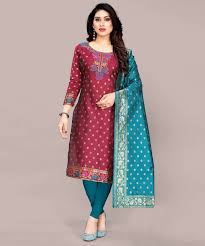
Originating in North India, the churidar is bottom wear, which is worn with kameez or a tunic. Characterized by its tight fit near the ankle, it uses extra fabric to be gathered around the ankle. A churidar is a versatile outfit that can be worn for both formal and casual events. It can be stitched with cotton, silk, or chiffon and to add that touch of elegance it can be embellished with sequins or embroidery.


A modest and conservative garment that covers the leg, the churidar is loved by women from India, Pakistan, Bangladesh, and other south Asian countries. It is a comfortable and easy-to-move-around attire.

Chanderi silk

Image source Jaypore


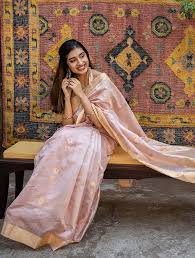
Handwoven by artisans in the town of Chanderi, Madhya Pradesh, chanderi silk is a fabric that is a combination of cotton threads and silk. Unparalleled quality, exquisite texture, and intricate designs make it a luxurious fabric that is known for its sheer texture and lightweight that makes it stand apart distinctly.


The soft and delicate feel makes it perfect for weaving comfortable garments. The history dates to the 7th Century, wherein the artisans spun the thread to yarn, dye them with vibrant colors, and then weave them into the fabric. Highly coveted for its intricate design and graceful drape, the chanderi silk often uses zari which is a metallic thread that adds to the glamour of the drape.


Elegant and sophisticated evening wear can be made because of the natural sheen, but since it’s also lightweight, it can be suited to make daily or casual wear garments as well. Such is the versatility of the fabric. The fabric can be woven into sarees, salwar, and lehenga.

Chikankari

Image source meesho


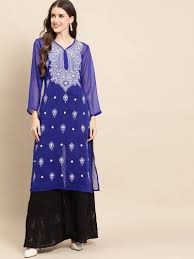
An embroidery technique that comprises intricate handmade designs being stitched onto lightweight airy fabrics is chikankari which originates from the state of Uttar Pradesh. It is a traditional embroidery style derived from the Persian word ‘chikan’ which means embroidery. It is usually done on lightweight fabrics like silk, muslin, and cotton.


Initially brought to India by the Persians, the technique was later adopted by the Mughals who used it to make garments for the nobility who made it an art form, so we could also say that the chikankari art flourished during the Mughal Era. Now it is a widely practiced embroidery technique that is also loved by the general population.


Floral motifs, paisleys, and geometric designs are some of the intricate patterns of embroidery that are done on the fabric. Mostly done in white or pastel colors the light weight of the fabric is the distinct feature of the chikankari which makes it perfect to be worn in summer. Its, crisp finished texture gives it a sophisticated look.


It takes days to finish making a garment because the process is highly labor-intensive because needs delicate embroidery which is one of the reasons that the fabric or garment is on the expensive side.

This post is part of #blogchatterA2Z 2023.

A’s in Indian women fashion

Dating back centuries, Indian Women’s fashion has a rich history. Be it the intricate designs, vibrant prints, or magnificent weaves, Indian women’s fashion is still evolving and offers a diversified range of styles and trends.
Beginning with A, I decided to pick out two styles and two weaves to discuss Indian Women’s fashion.


Anarkali and Angrakha


Being around for centuries, Anarkalis and Angrakhas are traditional attire with a rich history and are still in the limelight of contemporary fashion. Having been worn for special occasions like weddings and festivals to now being part of fusion wear, these Indian attires are not going anywhere out of trend.

Image source: Yash gallery


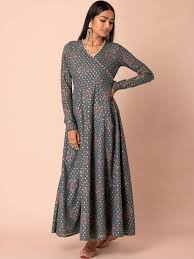
Anarkali, a long flowing dress was named after Anarkali, a famous dancer, and courtesan, who wore this attire when she performed for Emperor Akbar. It is said to have originated in the 16th century during the reign of the Mughals. Flaring out from the waist with a fitted bodice extending to the hips, the Anarkali attire is made of silk. Heavily embellished with sequins and embroidery on the bodice, the sleeves of an Anarkali can either be long or short and are usually made of sheer. It can be worn with a dupatta or as a dress in itself with just a scarf to accessorize or layer.

Image source : myntra


The Angrakha on the other hand, originated in the 18th century in Gujarat and Rajasthan. It was typically designed for men but was later adapted for women as well. Like Anarkali, the angrakha is a flowing skirt that flares from the waist but has a shorter bodice with a slit in the front. It’s usually made with light flowy fabrics like cotton and silk and often embellished with embroidery and vibrant prints for a grandeur look.


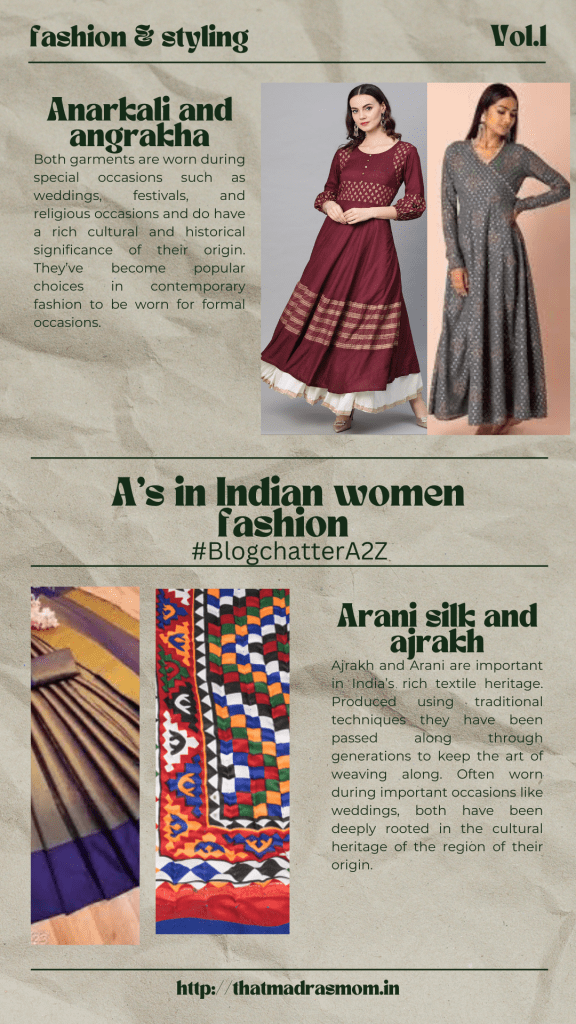
Both garments are worn during special occasions such as weddings, festivals, and religious occasions and do have a rich cultural and historical significance of their origin. They’ve become popular choices in contemporary fashion to be worn for formal occasions. Designers have also come up with modern twists making them into fusion wear, wherein the Anarkali can be worn as a floor-length gown and the angrakha is designed with unconventional prints and asymmetric hemline.


These attires have stood the test of time, and women wear them to be in connection with their heritage. Designers have adapted modern tastes giving twists to the attire in contemporary fashion.
This also is proof that these attire will remain popular for years to come and are timeless treasures.


Ajrakh and Arani silk


Known for their intricate designs and high-quality material, the Arani silk and Ajrakh prints are traditional Indian textiles that have been passed down for generations.

Image source : pixabay


Traditionally made, the ajrakh is a type of hand-block printed fabric from Kutch in Gujarat and Sindh in Pakistan. The fabric has been worn by generations of people in that region which dates to 4000 years. Cotton and silk fabrics are dyed with natural colors like indigo and Mudder and printed with intricate designs. It is then washed and dried a couple of times to achieve the desired pattern and color. The result is a fabric known for intricate geometric patterns and vibrant colors.


Considered a symbol of the wearer’s heritage the ajrakh fabric is often worn for weddings and religious occasions. The fabric has a deep cultural significance in the area it is produced. Sometimes used as a traditional remedy for certain ailments, the ajrakh is also believed to have healing properties.

Image source : meesho


Arani silk originates from the town of Arani in Tamil Nādu. Known for its high-quality and durability, it is used to make sarees and traditional attires. ‘Rehwa’, a process that involves twisting two threads to form a stronger, durable fabric is used in weaving the arani silk. The result is a fabric known for its lustre and softness.


Highly sought after for their beauty and quality, the arani silk sarees are worn during weddings, and religious occasions and are even passed along through generations as family heirlooms. Being produced in the Arani town for centuries it is a major part of the local economy.


Ajrakh and Arani are important in India’s rich textile heritage. Produced using traditional techniques they have been passed along through generations to keep the art of weaving along. Often worn during important occasions like weddings, both have been deeply rooted in the cultural heritage of the region of their origin. Prized for their beauty and cultural significance be it the lustrous beauty of Arani silk or the intricate patterns of Ajrakh, people around the world continue to be captivated.

This post is a part of #BlogchatterA2Z 2023.