Lessons from how to win friends and influence people

Dale Carnegie was an American writer and lecturer who was also the developer for several courses on self-improvement skills and interpersonal skills. He was the author of “ How to win friends and influence people” one of the best selling self-help books till date.

Over a 100 years Dale Carnegie has been helping about 9 million + graduates and helping them out to lead business, career and life through his courses. Though the book, “ How to win friends and influence people” was published in 1936 the principles mentioned hold good and are still deemed the best in improving the self. And the reason being that Dale did not put them out based on trends or fad and they still serve to be the building blocks of social intelligence.
Though the language and references( Abraham Lincoln) that the book contains might seem to be dated, the book was of great help during the Great Depression and one of the books picked up by Warren Buffet.

The book is based on principles that help makes one a successful person in all aspects of life. Becoming a financial success requires 15% of professional knowledge and 85% of the ability to express the ideas, to be a leader and to arouse enthusiasm among others.

The book definitely shows you the sure shot way to not only attain success but also build and establish a career.

Let me take you through the lessons from the book .

Praise others’ achievements

We need to be genuine when we praise people. It has to be lavish is what he exactly says, but at the same time be true. He puts it as,

“Abilities wither under criticism; they blossom under encouragement,” We all crave to be recognized and appreciated. We also would do almost anything to get that. At the same time, it shouldn’t be something that was said to flatter and be put out showing insincerity.

Be empathetic

“The only way on how to influence people is to talk about what they want and show them how to get it”. He also explains by quoting Henry Ford,“If there is any one secret of success, it lies in the ability to get the other person’s point of view and see things from that person’s angle as well as from your own.” Looking at a situation from an other person’s perspective sure does help in most situations to frame our actions.

Avoid criticizing, condemning, or complaining.


“Any fool can criticize, condemn, and complain – and most fools do,” Carnegie writes. “But it takes character and self-control to be understanding and forgiving.”

Being a leader, one should acknowledge the subordinate who doesn’t meet expectations or a competitor whose approach is inferior compared to them. But thus should be done in a way which would acknowledge what is working and encourages improvement

Acknowledging own mistakes

When being a best leader, one should not lionize themselves, to make it appear that they are not flawless.

“Admitting one’s own mistakes — even when one hasn’t corrected them — can help convince somebody to change his behavior,” Carnegie wrote. How true is this? Have you tried this out?

Acknowledging when a mistake is made and admitting to have committed it, is a great step and requires a lot of courage to do so.

Respect others’ dignity

When a leader demotes and employee or lets the employee go away, he/she needs to recognize the person with dignity and not use the opportunity to humiliate them. To be practical, the leader has to remain on good terms with the person who didn’t work out, because there is a future possibility that they might have to cross paths or even have the chance to work together again.

Know the value of charm

Steel magnate Charles Schwab claimed his smile was worth a million bucks — literally. For a man like him, the charm he holds and his capability to make people like him was one of the factors he remained successful. His smile was definitely captivating. So the charm is one of the factors that makes you and the people around you cheerful.

Encourage people to talk about themselves

People tend to relax in tense situations when they talk about things they know and which includes themselves. And when you listen to someone when they speak that would be the greatest compliment you could offer them.

Know when to use suggestions instead of direct orders

Leaders instead of barking orders to employees who instead lead them with suggestions tend to see more success. A classic example would be Owen D. Young , an Industrialist. Helping employees do things by themselves instead of directing them with orders helps them learn from their mistakes.

Be friendly, no matter how angry the other person may be


We are humans and we tend to handle aggression with aggression but instead if the high road is taken by maintaining composure when you make efforts to try and persuade the other person by appreciating their perspective, the result sure is surprising when you know what you just accomplished.

With you being cool and collected the other person sure would be embarrassed themselves.

Reach common ground as soon as possible

Stressing out the opinion or emphasizing things you agree and keep doing it which would put out the message that both of you want or strive for the same ending bu the only difference being in the method that is being implemented and not the purpose.
Carnegie says,”Begin by emphasizing — and keep on emphasizing — the things on which you agree,”

Get others to think your conclusion is their own.


Most persuasive people are the ones who would understand the power of suggestion over demands . This helps to win situations and emphasizes the fact that you cannot force a person to believe something.

He also says that when planting a seed and it blossoms , curb the urge to take credit for it.

Don’t try “winning” an argument

You achieve nothing when you tear apart an argument with another person. Carnegie cites by quoting an old saying, “A man convinced against his will/Is of the same opinion still.” When we need to persuade someone, make sure to avoid argument in the first place.

Click here to purchase your copy.

This post is part of blogchatter’s half marathon.

Lessons from Tuesdays with Morrie


I was really not a fan of non-fiction and especially self-help. Gone are the days where people browsed online to improvise their life skills, self-esteem and then came the era of youtube videos. We had a lot of self-help experts pitching in and making videos to help people learn from home.


But however the joy of learning to mould yourself from reading a book. The life lessons that the book imparts on you is sure to leave a lasting impact. Though we do see a lot of things in daily life some memories of events or facts from the books we read linger fresh in our minds no matter the time that passes.


One such book that was gifted to me and really made me think of life in a while new perspective is Mitch Albom’s “ Tuesdays with Morrie”.


The Author’s favourite teacher Morries Schwartz is in his death bed counting his days as he suffers from a chronic disease. The Author meets up with Morrie every Tuesday and the book gives you the events or life lessons that Morrie imparts to Mitch.


People’s perception of their life and the life around them changes when they come to know that they are dying. It is a sequential turn that they take in their journey of life that makes them realize what is important and what is not.


Morrie from his death bed helps Mitch unfold answers to a lot of complex life problems. His slow demise makes Mitch give a deep thought and understands how to deal with life and the complex situations it puts us in.


As Morrie says to Mitch,

 “Study me in my slow and patient demise. Watch what happens to me. Learn with me..” 

But Mitch puts it this way,


“Morrie would walk that final bridge between life and death, and narrate the trip.”


Here are my takeaways and the lessons that I learnt from the book.


1. Questions for self-reflection. Because living a life that is fulfilling deserves answers to these questions.


Have you found someone to share your heart with?
Are you giving to your community?
Are you at peace with yourself?
Are you trying to be as human as you can be?

We may or may not have come across these questions but if we do have the answers we know we’re on the right path.


2.“The culture we have does not make people feel good about themselves. We’re teaching the wrong things. And you have to be strong enough to say if the culture doesn’t work, don’t buy it. Create your own.”


Morrie explains how the culture is flawed and how should we create one if we do not fit into what exists currently.


3.“Life is a series of pulls back & forth. You want to do one thing, but you are bound to do something else. Something hurts you, yet you know it shouldn’t. You take certain things for granted, even when you know you should never take anything for granted. A tension of opposites, like a pull on a rubber band. And most of us live somewhere in the middle.” 

The above quote explains how Morrie puts the topic of tension of opposites. The confusion of age that brings in what is expected of us to what we actually want. The quote clearly makes you think that we humans suffer consequences of our self-created problems. We put ourselves into complicated situations.


4.“So many people walk around with a meaningless life. They seem half-asleep, even when they’re busy doing things they think are important. This is because they’ve been chasing the wrong things. The way you get meaning in your life is to devote yourself to loving others, devote yourself to your community around you, and devote yourself to creating something that gives you purpose and meaning.”
Preserving humanity is the greatest cause to which we must devote ourselves when we need happiness and satisfaction.


5.“The most important thing in life is to learn how to give out love, and how to let it come in. We think we don’t deserve love. We think, if we let it in, we’ll become too weak.  But, a wise man named Lenin said it right. He said, “Love is the only rational act.”

The universe exists and survives on love. The very basis of humanity is love and so,
the most important lesson that we learn is how to give out love and how to let it inside?

6.
“Why are we embarrassed by silence? What comfort do we find in all the noise?”  We quite often avoid or are embarrassed by silence failing to realize that silence, solitude and loneliness are the gift to mankind.


7.
“Do the kinds of things that come from the heart. When you do, you won’t be dissatisfied, you won’t be envious, you won’t be longing for somebody else’s things. On the contrary, you’ll be overwhelmed with what comes back”

In a nutshell trust and faith should come from within. If we want others to have trust in us, we should also have the same in them. This will not make you feel envious.

8.

Everyone knows they are going to die, but nobody believes it. If we did, we would do things differently.”
Living is fear of death will never be the answer, when we fail to accept that death is a part of our life and is inevitable. Learning to take time of things that matter and living life to the fullest is the key that will help you in accepting the fact.

Morrie suggests doing what Buddhists do, which is: “Every day, have a little bird on your shoulder that asks, ‘Is today the day? Am I ready? Am I doing all I need to do? Am I being the person I want to be?’”

Click here to purchase your copy.

This post is part of Blogchatter’s half marathon.

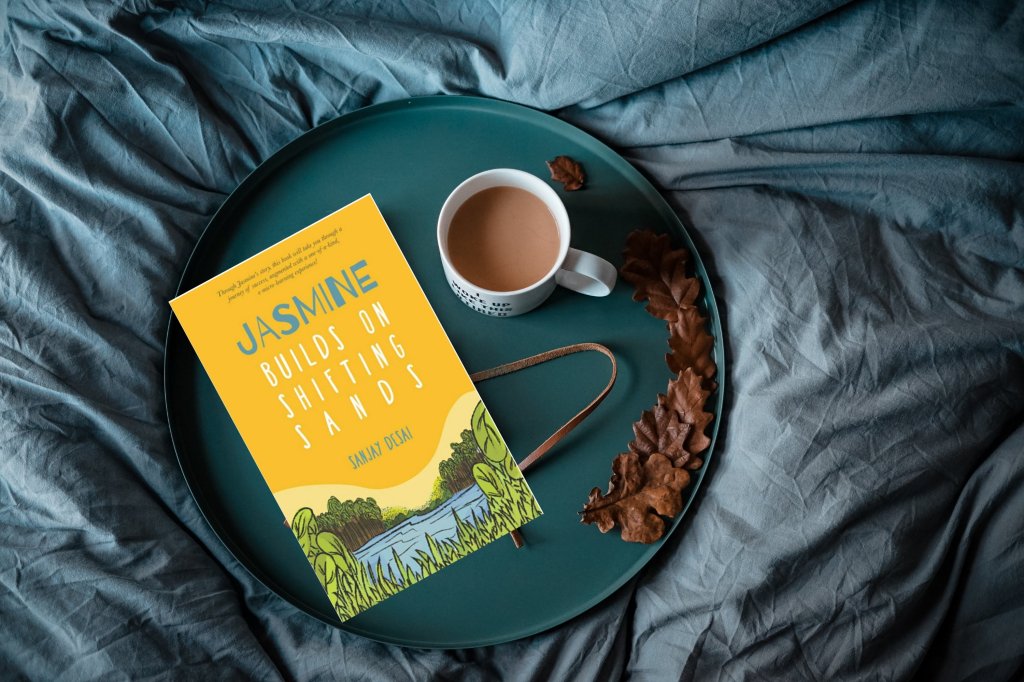
Self-discovery through Jasmine builds on shifting sands

Fiction and self-help are two of my favourite genres of books. I really don’t know the time ticking when I settle down in my reading corner with books in any one of these genres.

What I look for in self-help books is strategies, lessons, case studies which tell you what to and what not to do.

When I came to know that this book has both self-help and fiction entwined I knew I definitely had to pick it up.

What I could also relate is that the book is set in modern period and so is something everyone of us millenials could resonate to.

It takes a lot of time for us to understand ourselves in a better way. The process of understanding oneself, about what we can and what we cannot, how we can and when we can is called self-discovery. Not everyone of us do this at the same time. Time plays an important role in making us realise this. This book embarks you on Jasmine’s journey of self-discovery.


The picturesque views of Himalayas while describing the journey to Kedarnath, would make you embark on a virtual journey. The pure relationship between the author and his spiritual teacher , their conversations mentioned provide a lot of learning.

Jasmine who was about to land into a professional career eventually landed into the world of modelling. So how does she handle it ? Does she succeed or fail ?

She had her parts of failures, jealousies, competition, wrong ways and finally rose above all of it. The author has a lot of learnings from life which he’s penned out beautifully through the story of Jasmine.

Everyone of us has a dream, a goal or an aim. We pursue our actions towards them . Did you know that the universe also has a major role in making our dreams come true?

A motivational book that helps you to stay focused and have a positive approach to rise above hurdles and accomplish the dream. The connection to the universe and it’s integral part in making our dreams come true also is a lesson to be learnt.

I love the writing style of the author which he serves to keep it lucid and brief. Overall a good guide for self-motivation and self-discovery.

The QR code scanning of certain chapters, through e-micro-learning is a completely different experience which is suggest all book lovers and people who are digital fan boys must check out.

Following our passion by overcoming hurdles should definitely be made a mandatory life skill to be possessed.

About the author

Sanjay is an entrepreneur and an ex-banker, an alumnus of IIM Bangalore and a Chartered Accountant. During his successful career, Sanjay has been integrating the essence of a parallel spiritual journey with his material pursuits. He has now set out to share the ways and means of seamlessly traversing through the material and spiritual world. Thereby, enriching each journey.

Click on the book cover below to purchase this motivational guide .

Review of Jasmine builds on shifting sands

Jasmine builds on shifting sands

BLURB

Integrated with hybrid multimedia learning tools, Jasmine Builds on Shifting Sands is a unique self-help fiction offering. Its captivating narrative ties two seemingly distinct tales in an intertwined journey that explores the manifestation of dreams. At the center of the book is Jasmine’s journey of making it as a successful model in the cut-throat world of fashion. Her tale of victory and failure is enveloped within the master narrative of Sanjay, an erudite knowledge-seeker who meets his spiritual guru- Ma. Set between the esoter ic location of the Himalayas and the urban bustle of Mumbai, the book offers an enhanced learning experience which is further amplified through the embedded microlearning content that is interspersed throughout the text, making for a truly immersive experience.

MY REVIEW

Jasmine builds on shifting sands

Fiction and self-help are two of my favourite genres of books. I really don’t know the time ticking when I settle down in my reading corner with books in any one of these genres.

As much as I enjoy fiction, I also enjoy reading self-help books and try implementing principles which suit my way of life. That’s what they’re written for right?

What I look for in self-help books is strategies, lessons, case studies which tell you what to and what not to do. They should make you feel that you could try attempting to implement lessons learned. Examples which state what went wrong and how could that have been handled to make it successful are stuffs which anyone would basically look for in self-help books.

When I came to know that this book has both self-help and fiction entwined I knew I definitely had to pick it up.

What I could also relate is that the book is set in modern period and so is something everyone of us millenials could resonate to.

It takes a lot of time for us to understand ourselves in a better way. Not knowing about ourselves and instead looking out for others to accept us is something that is not plausible. The process of understanding oneself, about what we can and what we cannot, how we can and when we can is called self-discovery. Not everyone of us do this at the same time. For some of us this process happens early and for some later on. This book embarks you on Jasmine’s journey of self-discovery.

The Prologue and the Epilogue add value by providing a powerful context arising from the author’s own personal experience.

The realistic description of the travel to Kedarnath, the picturesque views of Himalaya would make you embark on a virtual journey. The divine relationship between the author and his spiritual guru , their conversations mentioned provide a lot of spiritual learning.

Jasmine who was about to land into a professional career life eventually landed into the world of fashion. Now that is two extreme opposite fields. So how does she handle it ? Does she succeed or fail ? Is she happy or keeps brooding ?

The field that she landed was something completely new to her. She had her parts of failures, jealousies, competition, wrong ways and finally rose above all of it. The author has a lot of learnings from life which he’s penned out beautifully through the story of Jasmine.

Everyone of us has a dream, a goal or an aim. We pursue our actions towards them . We chart out a goal plan to achieve the results. Did you know that the universe also has a major role in making our dreams come true? Now that is what the author tries to convey.

A motivational book that helps you to stay focused and have a positive approach to rise above hurdles and accomplish the dream. The connection to the universe and it’s integral part in making our dreams come true also is a lesson to be learnt.

I love the writing style of the author which he serves to keep it simple and crisp. No beating around the bush or extravagant descriptions. Overall a good one for self-motivation and self-discovery.

About the author :

Sanjay is an entrepreneur and an ex-banker, an alumnus of IIM Bangalore and a Chartered Accountant. During his successful career, Sanjay has been integrating the essence of a parallel spiritual journey with his material pursuits. He has now set out to share the ways and means of seamlessly traversing through the material and spiritual world. Thereby, enriching each journey.

Click below on the thumbnail to buy yourself a copy.

This blog post is part of the blog challenge ‘Blogaberry Dazzle’ hosted by Cindy D’Silva and Noor Anand Chawla, and generously SPONSORED BY Bugshield Clothing – Enjoy Outdoors More!