L in Indian women fashion

A diverse field steeped in culture and tradition Indian women’s fashion comprises a range of styles and influences from modern-inspired dresses to traditional sarees. Deeply rooted in the culture, it also evolves with changing economic and social trends.


Let us look at Indian fashion trends in L.


Lehenga
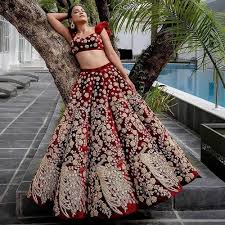
Image source Peachmode


A long skirt embellished with embroidery and a fitted blouse with a scarf is the lehenga, a traditional garment worn by women in India. Depending upon the fabric and colors, the lehengas come in various styles and are worn for weddings and special occasions.


Tracing back the origin to the Mughal Empire, the wives of the royal family were known for their love of extravagant clothing. A sign of wealth and luxury, the garment was worn by the affluent class and royalty.


The lehenga trend soon caught on and it became a popular choice for the bride and the bridesmaids. The garment has also undergone a lot of changes with the passing times, with respect to fabric, embroidery, and so on.


The A-line, circular, and mermaid are some of the types of lehenga which are most sought-after by the younger generation these days. Whether it is a wedding or a special occasion, the lehenga will make heads turn to your side.


Langa Voni


The langa voni or the half saree is a traditional attire worn by adolescent girls in South India. You can read more about it here.


Leheriya

Image source karagiri


A traditional Indian textile art originated in Rajasthan, a tie and dye technique that creates a wavy pattern and rippled effect. The word ‘leher’ means wavy which is in accordance with the patterns created.


The local artisans in Rajasthan introduced the art in the late 18th century, initially created using natural dyes and colors. The bright and bold colors symbolize the vibrant colors of Rajasthan. The fabric is twisted like a rope and tied at certain intervals post which it is dyed. The leheriya is now incorporated into modern fashion. Though synthetic dyes are now being used, the local artisans still prefer natural dyes for the fabric.


Lepcha weave
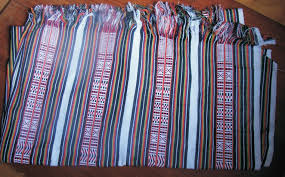
Image source government of Sikkim


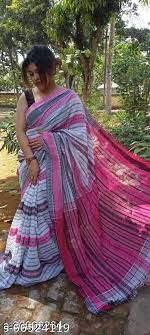
Practiced by the Lepcha people of the northeastern region, the Lepcha weave is an intricate and labor-intensive weaving technique. It uses natural fibres like cotton, silk, and wool. The use of natural dyes from plants, roots, and berries gives vibrant colors to the fabric. Simple designs like stripes and checks to complicated designs like geometrics designs are woven by the artisans. The weave is an integral part of Lepcha culture. The government has taken steps to preserve and promote by enabling artisans to sell their products online.


Laisingphee weave
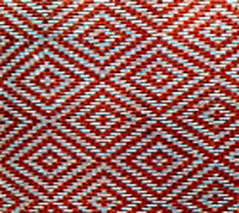
Image source of asiainch


Practiced by the Meitei tribe in the northeastern part of India the Laisingphee is a traditional handloom weaving technique. It uses a fly shuttle loom and natural fibres like cotton and silk.


A high level of skill is required to operate the fly shuttle loom and to achieve the desired pattern the weaver must use a good combination of speed and precision. Natural dyes like indigo, turmeric, and madder root are used to achieve bright and vibrant colors in the fabric.


An important part of the Meitei culture, the laisingphee is used to make clothing and even home furnishing materials.

This post is part of #blogchatterA2Z 2023.

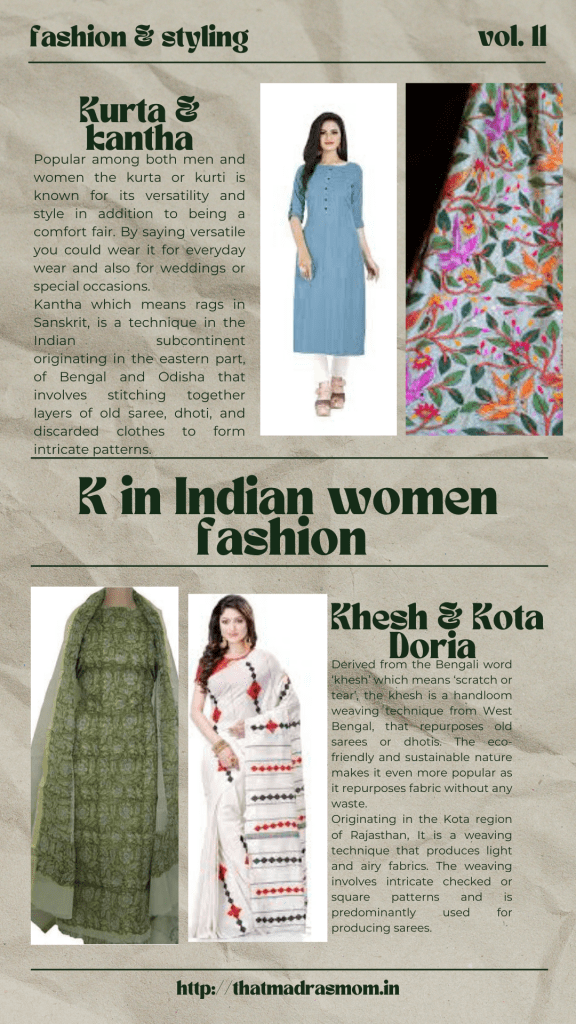
K in Indian women fashion

Let us look at trends in K. We have a lot of weaves in K that are popular among the masses even now.


Kurta/Kurti

Image source Amazon


Popular among both men and women the kurta or kurti is known for its versatility and style in addition to being a comfort fair. By saying versatile you could wear it for everyday wear and also for weddings or special occasions.


The kurta is long, loose-fitted, and has a length below the knee, the kurti is typically shorter and is usually till the knee or above it. They can be made in a variety of fabrics like cotton, silk, and chiffon. They can also have embellishments like embroidery, and sequins which adds more beauty.


Depending upon the occasion the garment can be dressed up or down. Say for everyday wear it can be paired with a jean, dhoti pants, or leggings, but for a wedding, it can be made grandeur with heavy embellishments and accessories.


The loose fit makes the garment airier and easier to move around making it one of the most sought-after comforts. It is also easy to be cared for like machine washing and hand or dry wash for expensive materials or work done on them.


A great way to depict Indian cultural heritage it can also be worn for religious occasions and marriages, the kurta/kurti is a symbol of Indian identity and pride. A worth-considering outfit known for its versatility, the kurta/kurti gains popularity even overseas.


Kantha weave

Image source Indiamart


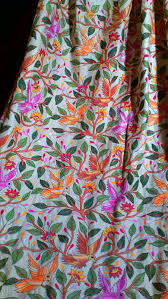
Kantha which means rags in Sanskrit, is a technique in the Indian subcontinent originating in the eastern part, of Bengal and Odisha that involves stitching together layers of old saree, dhoti, and discarded clothes to form intricate patterns. Could be considered as recycling old clothes into functional ones like cushions or quilts.


A technique that was traditionally practiced by the rural women, who would collect fabrics and turn them into functional household materials this was later adopted by skilled artisans to create beautiful garments. The product is rustic and elegant.


The versatility is a great advantage of this weave, be it for cushions, quilts, sarees, or salwar. The repurposing of old fabrics aids sustainability which is one more reason the weave is becoming much famous. The weave also helps support rural women’s communities.


Khesh

Image source Ajio


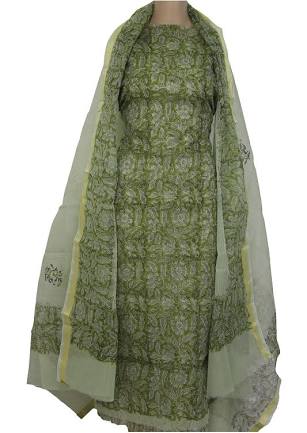
Derived from the Bengali word ‘khesh’ which means ‘scratch or tear’, the khesh is a handloom weaving technique from West Bengal, that repurposes old sarees or dhotis. The eco-friendly and sustainable nature makes it even more popular as it repurposes fabric without any waste.


The unique and colorful designs make it stand apart, a single color is used as warp, and strips from pre-used clothing woven as weft result in textured fabrics with vibrant colors.


It is time-consuming and laborious as the weaver needs to carefully select the pre-worn garment strips that would go well with the warp. The woven cloth is used to make furnishings like curtains and cushion covers and also sarees. Known for its vibrant colours and texture the weave is also making its way to the fashion industry where designers use this for upcoming projects.


Kota Doria

Image source Amazon


Originating in the Kota region of Rajasthan, It is a weaving technique that produces light and airy fabrics. The weaving involves intricate checked or square patterns and is predominantly used for producing sarees. It uses two yarns thick one called the warp and a thin one called the weft. The weft yarns are passed over and under the warp threads to form the square patterns.


The fabric is lightweight and breathable which is great for hot and humid weather. White, beige, and pastel are usual colors but with changing trends they are now available in different colors. It has a GI tag that makes it unique and authentic and it is made by traditional methods.

This post is part of #blogchatterA2Z 2023.
J in Indian women fashion

Indian fashion is an evolving industry that keeps coming up with new designs every day. Based on comfort, affordability, the fabric used, and the occasion or region where it is worn we have lots of options when it comes to styling.


Let us take a look at trends in J.


Jamawar

Image source Isha foundation


A beautiful, luxurious fabric prized for centuries, the Jamawar is known for its intricate designs and most importantly its reversible nature, along with the use of gold and silver yarn which makes it a symbol of elegance.


It is a type of shawl made with silk, wool, and gold, silver threads that trace back its origin during the reign of the Mughals. A symbol of wealth and luxury the Jamawar is woven in Iran, India, and Pakistan. Weaved as a special garment for royalty it is also an expensive trade commodity, which makes it a prized possession and a symbol for the elite population.


The pattern is drawn on paper and then transferred to warp threads, it is then tied, and dyed as per the drawn design post in which the weft thread is inserted. The design on one side is a mirror image of the other making the fabric reversible which is possible with the kani technique of weaving. The weaving is done on the back following the design which appears on the front.


The designs are predominantly inspired by nature like paisleys, and flowers. The Jamawar is known as an adulterated form of the pashmina weave. But then the production has also declined because of the cheaper availability of fabrics that are machine-made.


Jamdani

Image source meesho


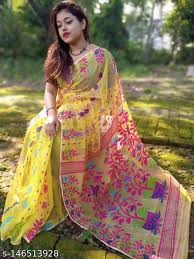
Particularly originating and to have been practiced in Bangladesh and Bengal, the Jamdani is a handloom weaving technique that is done with intricate designs on cotton fabric. Derived from the Persian word ‘Jam’ which means Flower and ‘Dani’ which means vase, the weaving includes making designs of flowers onto the fabric.


A thicker cotton thread katan is woven between warp threads and to which the weft is inserted later. The Katan is removed once weaving is done, which results in intricate patterns being done on the fabric which look vibrant. The quality can be decided based on the design and skill of the weaver. The more skilled the weaver is, the more intricate the design on the fabric. The fabrics are lightweight and most suited for hot and humid climates.


Due to cheaper machine-made fabrics, Jamdani production is declining which Government is taking steps to preserve this weaving technique and train skilled weavers, and bring this art to the next generation to be taken forward. Several non-profit organizations along with the Government train skilled laborers, support them and create employment opportunities for their livelihood.

This post is part of #blogchatterA2Z 2023.

I in Indian women fashion

The Indian fashion industry not only comes up with new ideas but also revives traditional wear by adopting techniques in cuts and giving the outfit a new dimension. The weaves from yesteryear are great fabrics for modern wear today.


Let us look at trends in I.


Ilkal weave

Image source Amazon


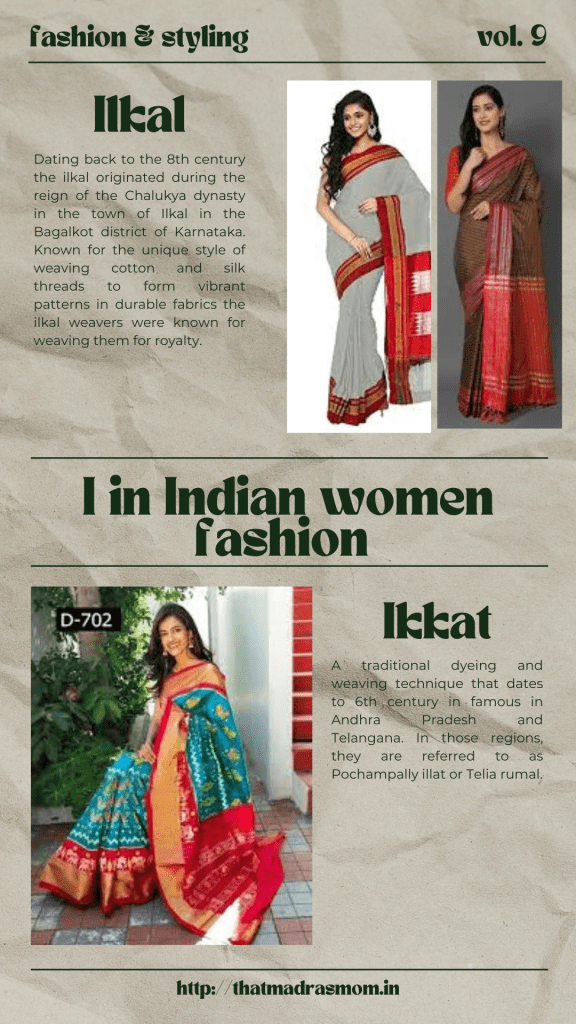
Dating back to the 8th century the ilkal originated during the reign of the Chalukya dynasty in the town of Ilkal in the Bagalkot district of Karnataka. Known for the unique style of weaving cotton and silk threads to form vibrant patterns in durable fabrics the ilkal weavers were known for weaving them for royalty.


The garment had intricate designs and patterns, which followed the ilkal weave evolving by incorporating elements from neighboring regions. Temple silk is the special yarn that is used for weaving which gives stiffness and makes it easier to weave. The pit loom allows the weaving of complex patterns and designs which makes it unique.


Bright and bold colors like red, green, and gold are predominantly used for ilkal weaving. The weaving is a time-consuming process that begins with the preparation of the yarn. The cotton and silk threads are prepared separately, wherein silk is treated with starch to get stiffness. The two threads are then weaved together through weft and warp techniques in the pit loom.


The resulting Ilkal fabric is durable and is resistant to wear and tear. The fabric is also known to retain color and shape therefore has a long life and is one of the reasons that it is most sought-after.


As long as there are skilled ilkal weavers, it will continue to thrive and mesmerize us with its vibrant beauty. Ilkal sarees are passed across generations as family heirlooms.

Ikkat

Image source Indiamart


A traditional dyeing and weaving technique that dates to the 6th century is famous in Andhra Pradesh and Telangana. In those regions, they are referred to as Pochampally illat or Telia rumal.


They are majorly known for their vibrant colors, intricate designs, and durability. A time-consuming and labor-intensive method, the weaving involves preparing yarn by tying and wrapping them in resist like mud or wax for patterns, post which they are dipped in dye. The resist is then removed and the thread is sent into the loom to be woven into a vibrant fabric.


It’s a unique look where the pattern looks like it is woven into the fabric unlike others that look printed on the fabric making it stand apart from its counterparts. Initially used for sarees the ikkat is now part of a lot of garments like salwar, jumpsuits, and even furnishings like table runners and curtains.


Owing to the time consumption and skilled craftsmanship the cost is a bit on the higher side. The ikkat dyeing has now also been done on silk which gives the sarees a grandeur looks with the intricate patterns and vibrant colors.

When we discuss trends in I, we can also mention Indo-western dresses which is nothing but the fusion wear we discussed while discussing trends in F which can be read here.

This post is part of #blogchatterA2Z 2023.
H in Indian women fashion

Indian women’s fashion trends never have an end, because each day we see a new trend popping up. Thanks to social media for taking long trends across the length and breadth of the land. In today’s post we discuss the trends in H.


Half saree

Image source Amazon


Also known as langa voni or pavada davani, the half saree is predominantly worked by the adolescent girls in South India. A garment that is gifted by the maternal uncle to the girl once she attains puberty, the half saree is a three piece attire consisting of a long skirt, blouse and a cloth that is to be draped over across the left shoulder.


Adolescent girls wear this attire until they are married. Though it might seem similar to the ghaghra choli of North India it differs in the way the dupatta is draped. The half saree can be weaved in cotton for casual wear and in silk or luxurious materials for festive wear.

Initially it was similar colors that were paired but with changing trends extreme contrast and even different materials for all three parts of the garment is now becoming fashionable.
Even sarees these days have adopted the half and half look which will make the saree appear like a half saree. Embellished with stones, sequins and embroidery the half saree can be made to look elegant and beautiful.


Habaspuri sarees

Image source Indiamart


Known for their unique motifs like kumbha, fish and flower worn into the fabric with mulberry or cotton silk threads on handloom the habaspuri sarees trace back their origin to habaspur in Odisha.


Exceptional attention to intricate designs and craftsmanship is the unique highlight of this weave and a motif that resembles a longitudinally arranged temple makes it stand out from other weaves. One of Odisha’s symbols of cultural heritage the habaspuri saree is a great addition to your beautiful wardrobe.


As the art of this particular weave is almost dying since youngsters have now turned to different occupations, the Government in a last resort has planned training for the youth to keep the art of this weave alive. A GI tag is provided to not only ensure the quality is high but also to bring a competitive price in the international market.


How can one forget handloom sarees , made by hand in the look with patterns warp and weft handloom weaves should be preserved and purchased to support local artisans whose livelihood depends on selling these garments.

This post is part of #blogchatterA2Z 2023.

G in Indian women fashion

Talking about Indian women’s fashion, if you have been following this series, I will introduce the alphabet with a dress and a weave. The reason I do that is we already know that there is a garment and the weave is mentioned so that we get to know about the fabric that it’s been used for so that we could also come up with ideas to bring that idea of ours to life. The one that uses the Indian weave for the outfit of your dreams. Because who said you cannot have a haram pant in silk and pair it up with a chanderi tank top layered with a bagru print long shrug and accessorized with kundan long chains? After all, fashion is in the mind of a person who envisions how they would want to present themselves.

Today let us look at the alphabet G.


Ghaghara choli

Image source Myntra


Having been there for centuries, this traditional and elegant attire that comprises a long skirt, a scarf, and a blouse is the Ghaghara choli. Worn by women during festivities and special occasions this three-piece garment gleams elegance and beauty at first glance.
Heavily embellished with sequins, embroidery, or even stones, the long flowing skirt made of silk or luxurious material is the Ghaghara. A short sleeved tight fitted blouse that is paired is the choli and the midriff is visible since the choli is stitched short.


The choli can be of the same material as the skirt or even different. Depending upon the occasion, it can be amped up with stone or sequin work to look grander in appeal than the skirt. The color could also be the same with contrast work or a fabric that is of contrast color with minimal work would both work great with the Ghaghara. The neck designs also play an important role where it could be as halter, off-shoulder, or even backless. Overall, the choli should complement the long skirt, Ghaghara.


The final element that adds grandeur is the dupatta or the scarf which is draped over the shoulders or even covers the head. Heavily embellished with stones and embroidery the dupatta adds elegance and sophistication to complement the Ghaghara choli.


In addition to being aesthetic, the Ghaghara is also a comfortable garment that provides ease of movement because of the long skirt. The blouse can be stitched to fit perfectly for the body of the wearer.


Gadwal

Image source meesho


A lightweight durable fabric that is distinctive and stands out because of its sheen and texture, the gadwal originated in the town of Gadwal, Telangana. A unique blend of silk and cotton threads the gadwal is made of high-quality craftsmanship and has exquisite designs.


In a gadwal saree, the body of the saree is made of cotton threads and the pallu has silk threads. The body and the pallu along with the border are then attached finally to make it lightweight by a technique called kuttu. The interlocking of silk and cotton threads requires precision and highly skilled craftsmanship. Also, to note is the time-consuming process. Owing to the light and airy feel it can be worn in hot and humid climates.


The gadwal is a symbol of Telangana’s cultural heritage and can be worn for special occasions.

Gota patti

Image source Indiamart

An Indian embroidery technique where small pieces of zari which could be silver or gold ribbons being pasted on to the fabrics and then sewed at the end. A lengthy and time consuming process involves a lot of skilled craftsmanship.


When you look through the crowd at an Indian Wedding, I am very sure that you can find a couple of people wearing garments with gota patti. A traditional Indian embroidery technique that involves stitching metallic strips in gold and silver onto fabric with intricate designs the gota patti is used on saree and lehenga.


Prevalent during the Mughal era, it is believed to have originated in Lucknow. The strips known as zari also is now made with different colors like pastels and other hues. The motifs range from floral to paisleys and can also be geometric or abstract designs. Jaipur, Ajmer, Bikaner, and Udaipur are centers of this amazing art of intricate design weaving.

This post is part of #blogchatterA2Z 2023.
D’s in Indian women fashion

Weddings, festivals, or everyday wear, Indian women’s fashion is an important part of the country’s cultural heritage. From attire to accessories, we can say it is a dynamic industry. Let us look at fashion in D.


Dhoti pants

Image source Amazon

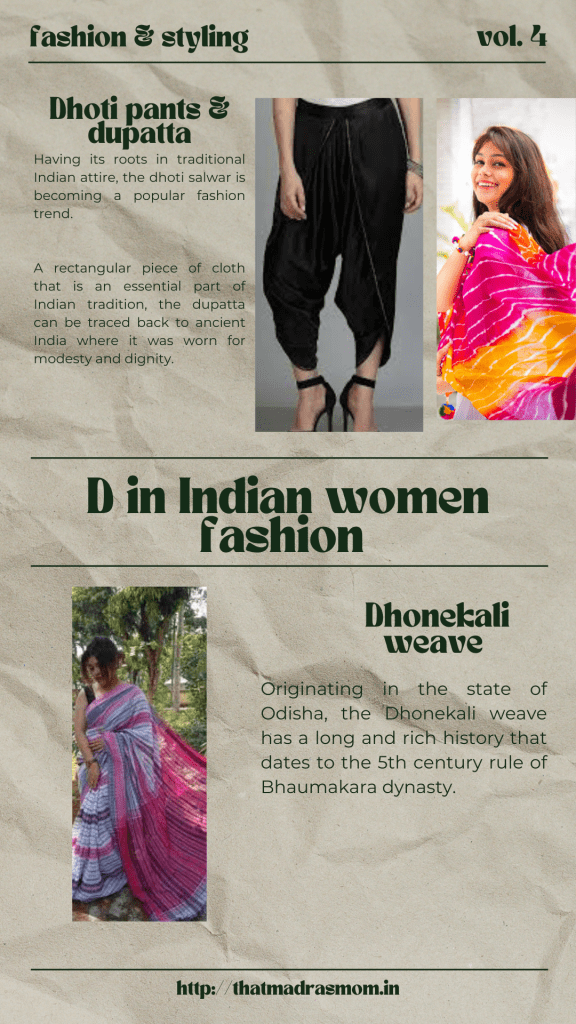
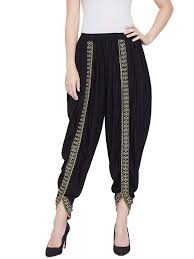
Having its roots in traditional Indian attire, the dhoti salwar is becoming a popular fashion trend. Honoring the cultural heritage but also wanting to have a chic and trendy look, fashion-conscious women have found a way to interpret traditional attire.


Typically worn by men in India, across centuries the dhoti is everyday wear but also makes its way to weddings depending on the fabric with which it is draped. Combining the comfort and fluidity of dhoti but maintaining the structure of a pant, the dhoti pants for women is undoubtedly one of the most versatile garments ever. With an elasticated waistband, it is suited for all body types and can be made in silk, linen, or cotton with vibrant colors and intricate patterns.


Its versatility is boundless that you can pair it with a t-shirt or tank top for a casual look, a kurta, and a heel for a formal look which makes it great for fusion wear. The loose and airy fit is great for the humid climate and makes it easy to move which makes it a great comfort wear.


It can also be layered with a jacket and sweaters with scarves to be worn during winter. So typically, the dhoti pants can be worn all through the year, depending on how you pair them with.


Dupatta

Image source Amazon


A rectangular piece of cloth that is an essential part of Indian tradition, the dupatta can be traced back to ancient India where it was worn for modesty and dignity. Elders considered it as a mark of respect when women wore it over their heads. It also gives an aesthetic appeal and is made from cotton, chiffon, silk, and georgette with intricate patterns embellished with stones and embroidery.


It is an essential component for most Indian attires like salwar, lehenga, and even sarees. It can be draped over the head, or the shoulders and sometimes even as a veil covering the face. While silk dupattas are reserved for weddings, cotton is preferred for everyday wear. It can be plain for everyday wear or embellished with stones or embroidery to give a touch of elegance.


Dhonekali weave

Image source meesho


Originating in the state of Odisha, the Dhonekali weave has a long and rich history that dates to the 5th century rule of Bhaumakara dynasty. Typically used to weave garments for weddings like saree for women and dhoti for men, the dhonekali is a technique that has a distinctive pattern.


Being passed down through generations the weave uses a hand-operated loom and uses a technique called dobby, which involves dobby bars which are wooden sticks to make intricate patterns. It also uses a special yarn katki which is twisted to create a stronger yarn and then dyed with colors to make intricate patterns.


An important part of Odisha’s cultural heritage, it is also a symbol of prestige and status, since it was worn during ceremonies. Not only garments, the weave also found its place in temples as prayer mats and wall hangings.

This post is part of #BlogchatterA2Z 2023.

C’s in Indian women fashion

Being a unique blend of traditional and modern styles Indian women’s fashion has evolved over the years. Intricate designs, craftsmanship, and vibrant colors make it stand out distinctly. Let us take a look at Indian women’s fashion in ‘C’.

Churidar

Image source Flipkart


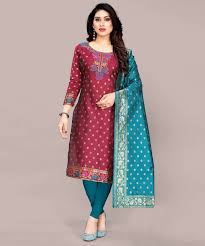
Originating in North India, the churidar is bottom wear, which is worn with kameez or a tunic. Characterized by its tight fit near the ankle, it uses extra fabric to be gathered around the ankle. A churidar is a versatile outfit that can be worn for both formal and casual events. It can be stitched with cotton, silk, or chiffon and to add that touch of elegance it can be embellished with sequins or embroidery.


A modest and conservative garment that covers the leg, the churidar is loved by women from India, Pakistan, Bangladesh, and other south Asian countries. It is a comfortable and easy-to-move-around attire.

Chanderi silk

Image source Jaypore


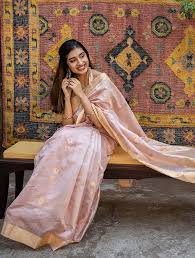
Handwoven by artisans in the town of Chanderi, Madhya Pradesh, chanderi silk is a fabric that is a combination of cotton threads and silk. Unparalleled quality, exquisite texture, and intricate designs make it a luxurious fabric that is known for its sheer texture and lightweight that makes it stand apart distinctly.


The soft and delicate feel makes it perfect for weaving comfortable garments. The history dates to the 7th Century, wherein the artisans spun the thread to yarn, dye them with vibrant colors, and then weave them into the fabric. Highly coveted for its intricate design and graceful drape, the chanderi silk often uses zari which is a metallic thread that adds to the glamour of the drape.


Elegant and sophisticated evening wear can be made because of the natural sheen, but since it’s also lightweight, it can be suited to make daily or casual wear garments as well. Such is the versatility of the fabric. The fabric can be woven into sarees, salwar, and lehenga.

Chikankari

Image source meesho


An embroidery technique that comprises intricate handmade designs being stitched onto lightweight airy fabrics is chikankari which originates from the state of Uttar Pradesh. It is a traditional embroidery style derived from the Persian word ‘chikan’ which means embroidery. It is usually done on lightweight fabrics like silk, muslin, and cotton.


Initially brought to India by the Persians, the technique was later adopted by the Mughals who used it to make garments for the nobility who made it an art form, so we could also say that the chikankari art flourished during the Mughal Era. Now it is a widely practiced embroidery technique that is also loved by the general population.


Floral motifs, paisleys, and geometric designs are some of the intricate patterns of embroidery that are done on the fabric. Mostly done in white or pastel colors the light weight of the fabric is the distinct feature of the chikankari which makes it perfect to be worn in summer. Its, crisp finished texture gives it a sophisticated look.


It takes days to finish making a garment because the process is highly labor-intensive because needs delicate embroidery which is one of the reasons that the fabric or garment is on the expensive side.

This post is part of #blogchatterA2Z 2023.