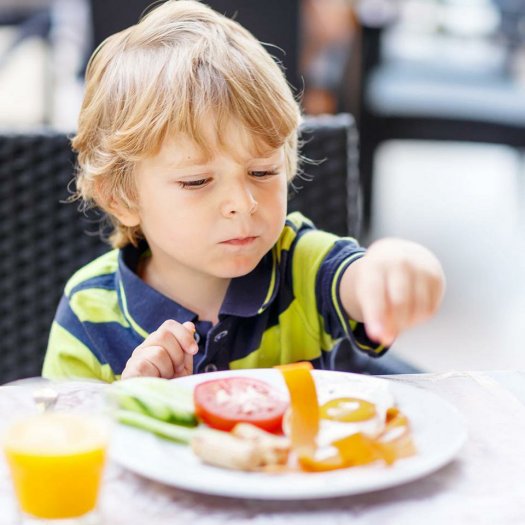
Taking your toddler to a restaurant. What to and what not to ?

Toddler at restaurant

How many of you are excited about going to a restaurant with a toddler? Okay let me put it this way. How many of you plan your trip to the restaurant with your toddler? By planning I mean everything- food, clothing, toys, stroller and what not.

For many of us taking a toddler with the family to have a fine dining out is something that requires days of planning. Have we taken this, have we taken that and a half way through the ride we go about” omg! We missed this”, looking at what we’ve packed seemed to be like a mini vacation.

So how can we turn this to something that we enjoy doing, something that we look forward to, something that would become a tradition to celebrate or come on let’s give the lady of the house some rest from cooking.

This can be slowly done by taking your child once he/she is about 7-8 months, so that they get used to the environment, look out what it is like, what people do.

Toddler at restaurant

Let’s take a look at few tips and tricks.

1) Eating early

This is certainly the most important point that needs to be taken into consideration. Plan to have your meal a little earlier so that your home early. Your child might be past bedtime, but you definitely need to be out of the restaurant and halfway down when they start getting cranky.

2) Pack a bag with food for the kid

You may plan to take the usual meal your toddler takes or if you’re someone who doesn’t want to run around and feed in the restaurant you may as well pack some healthy snacks to keep your toddler busy. You might even order an extra portion of salad or boiled veggies if your toddler is already sued to such food.

3) Get to know the place

You can place the order and then take round about the restaurant to explore or say hi if they are any kids around of the same age. And if you find one you’re lucky.

4) Plan what you eat

IF the restaurant that you planned to go has an online menu, make sure you decide what to order and eat there beforehand and not study the menu when you are actually there. This saves time, count on me.

5) Carry distractions

If your toddler is old enough to color to may carry some crayons and sheets keep them engaged. Some restaurants if they are kid friendly do have this available themselves. Reserve a set of toys for trips like these. They must be something new and not what the kid usually plays with.

6) Feed the kid before

If possible feed the kids before you start, in that way they are full and will not be cranky when you get there.

7) Get the corner table

Try your best to be seated in one of the corners or in booths, in that way the kid has more room and can save you from embarrassment.

8) Keep cutlery out of reach

Most parents give the children cutlery to play with. This is one of the worst way of distracting. Keep them out of reach.

9) Opt for a kid friendly restaurant

Look in for restaurants which have a high chair, kids zone and most importantly kid friendly menu. Don’t attempt to feed whatever your order to your kid to say that you are making them get used to it. They have all the time in the world to explore food. Always introduce new foods at home, by which I mean home cooked and not take away food being fed at home.

10) avoid the junk as treat

Avoid treating your kid with junk. This might tempt them to ask for it, when they see people at the other table having it.

11) Keep clean

Always carry two sets of bib and your own play mat. After all, since we eat in the restaurant we do not pay them for the mess the child makes.

12) table manners if kids are old enough

If the kids are old enough, teach them table manners. Practice pretend play of a restaurant. They can learn to order what they would want to eat with a little assistance from your side.

13) Toilet trips before eating

Take your kids to toilet before you settle down to eat.

14)Prepare for restlessness.

It may be tough for your kid to keep unmoving for a long time – about 45 minutes is the max for a child up to about age 5. Be ready to take them on a walk outside the restaurant.

15) IF everything fails; leave

Try not to get angry if, after all your preparation, your child is troublesome. Instead, ask for the bill and take away boxes, and finish the meal at home.

“If you’re so busy correcting your child that you aren’t enjoying your meal, it’s time to do something else,” says Pamela Gould, author of Feeding the Kids.

Teaching your toddler to clean up

Cleanup time

When can you start teaching your toddler to clean up. Not the point below carefully.

“If a child is old enough to get out a toy to play, she is old enough to put it away.”

So if your child is capable of choosing which toy to play with from the toy box; he/she is also capable of putting it back when done playing with.

Let me put forth some strategies that can get this done.

Choosing language or choice of words carefully

The child isn’t born with inherent cleaning skill. It is something that is learnt on observation or upon being told. So just a blunt “clean up your toys” is not going to take you anywhere in this situation. Break the clean up into smaller tasks. Teach them to group things according to size or type. Breaking up cleaning into smaller tasks makes it manageable and also easier for them to start with. I am sure a good way of communication is the key to get the toddler moving.

Start young

IF your toddler is just two but loves watching what the parents do. You can very well start teaching them. Give them a dust cloth or small broom with dust pan to start with. They can imitate what you do.

Cleaning up

Necessity of cleaning up

As a grown up, we know what clean up means, but to a toddler it means putting away the fun. Give them a reason or explain consequences with which they can relate; it makes it easier in this way. Tell them someone might trip, fall off and get hurt or the toddler cannot find the toy in the same place if it’s not put back.

Create Kid-Friendly Storage for Toys

Make sure toy storage is kid friendly. They should be able to pick up and clean up with ease. Place them in boxes- say one for blocks, one for stuffed toys and so on.

Less toys, rotate and one set at a time

It is better to segregate them into sets; which is another way. Less toys means very little time required for cleanup. Always rotate the sets so that they don’t get bored. Stop buying the same kind of toys. Also make sure only one set is out at a time.

Cleaning up

Do it with a Tune!

There are a lot of youtube kid channels which have a cleanup song. Show them how it’s done. This might help them understand easier. So whenever it’s time for cleanup you can join in, sing and do it together. Do you want to know what’s our favourite cleanup song. Check it out.

Make it a Game

This makes a wonderful game. You can set the timer and tell them do complete before the buzzer goes on. Or you can tell them to complete before we finish folding clothes. Doing it this way increases the fun factor.

Don’t make it perfect

When the play area is finally clean, leave it as it is. If the blocks aren’t stacked properly or the dust cloth is not put back straight, leave it. As long as the place is clean, don’t redo what was done. A toddler cannot clean up like an adult. But if you still do it again to get it perfect, something like you redo what was done, the toddler might not be inclined to do it the next time; because they know we would redo it anyways.

Putting toys to sleep

IF the toddler cleans up before sleep time, tell them the toys need to sleep in their respective places, so we need to make sure they are kept in respective places. Maybe the child can also cultivate the habit of saying goodnight to the toys once its cleaned up.

Set a good example

Before making the toddler do the cleanup, we ourselves should set a good example for them. IF not now, we should not put ourselves into a situation that we still make a mess and expect the child to do a cleanup.

What are the benefits of teaching them cleanup?

Learn Skills they use life long

The home is the perfect place to teach them skills which they could use for the rest of their lives. Once they learn now they needn’t have to be calling you for learning it again and again.

Learning to be responsible

Responsibility is a serious skill to teach. Each day we see kids who have been brought up without being taught what is being responsible like. I really don’t like the sight of it nor does it look good to witness. It’s a very important quality we teach kids that what is expected of them and there are other people who count on them.

Learning value of work

Work is not something we hate nor do we love to work. But over the pace of time we do learn its importance by taking part in the activity. We not only teach them the value but also be a good participant(worker). We are rewarded by our kids standing out from the peer population if we teach them the skill of work and its value.

Learning to appreciate

Do you know that cleaning up also teaches the child to appreciate the effort that goes into it? They also learn to care for what they own by cleaning and putting it away when not needed anymore.

Learning to value home

By teaching them how to clean we also educate them to value where they live. It helps them to exhibit respect for the people they live with. They learn to recognize that the space is being shared by others, and therefore we show respect to them and ourselves by cleaning.

Learning natural consequences

If we end up cleaning after them, especially when they are of age three or more they’re don’t learn natural consequences. It gives them the thought that “ I can make a mess and I have somebody to clean it up for me’.

Who is a fussy eater ? How to adapt and tame one .

What is fussy eating?

Fussy eating happens when usually your kid starts rejecting food or seems choosy about what is being fed.

When does a baby turn a fussy eater?

This can be a regular habit or can be at intervals. The baby may have an immature digestive system, which will cure itself with time, or might be teething, have an infection,food allergy, or just may not be ready for solid foods yet.

What symptoms should I look out for?

Your baby may push away the spoon or turn her head from it. She might close her mouth,as you try feeding her, spit out food, or become cranky or tired at mealtime. They might also start throwing food when they are playful.

Suggestions to avoid fussy eating stage

  • Don’t delay introducing lumpy foods. Keep changing frequently between purees and lumpy food.
  • Remember that your child will never voluntarily starve themselves. Hunger and fullness can be very well judged by kids.
  • Do not make a fuss of whether your child is eating or not. Remain calm. All we need to do is to concentrate on making mealtimes enjoyable family events. If an occurrence is enjoyable, your child will want to repeat it
  • Be genuine about the amount of effort you put into making your child’s meals. Don’t feel annoyed when they refuse to eat.
  • Don’t threaten and shout at them. This might make it even more difficult
  • Do not use desserts as bribes.

How do I adjust to my child’s eating habit:?

Part of the problem is solved when parents avoid to force feed a child like a adult.

  • If your kid is in the age of 2 months to 2 years, we need to understand that their stomach size would be small. If they have too much of liquid intake say fruit juice or milk, that might be filling them up and say no to a solid when offered.
  • The meal size should be that is something that should suffice a child- size. If they are hungrier they would ask for more. Ideal plan would be three meals spaced at an equal interval and a snack in between.
  • If the family is used to eating late at nights. This would not suit the child. They might get tired and start getting cranky. So always feed the last meal earlier.
  • Weekly assessment is better than daily.
  • Let the kid decide when they have had enough, this would help them understand their body and make them realize when to stop and when to ask for more.

How to tame my fussy eater?

  • Do not force feed the child. If the child turns the head away and rejects food by closing mouth , it’s a clear sign that they are full, even if it is very little. Trust your kid that they know how much to eat. Despite the above signs, if you still try to force feed it might lead to tension and discomfort.
  • Experiment with food textures. Even babies have food preferences. Some enjoy wet gravy foods, while the others prefer finger food. Some might want o continue with liquids, while the others might want to graze over half a dozen meal. Offer healthy options and he’ll develop a taste for them. But do not trick them with junk to eat the meal.
  • Change the speed. Some babies are fast eaters some are slow. So try changing the pace to see if there is a difference.
  • Do not distract the child. Keep away toys, books and turn off TV. Main focus should only be on eating.
  • It’s tempting to let a picky eater take as long as they want to eat. Keep meal length reasonable. It should not be more than 30 minutes. You can tell them you should eat before your hands become dry.
  • Let the baby touch and feel the food that is being offered. There is nothing wrong in exploring.
  • Follow your baby’s timeline. Most babies begin eating solid foods between 4 and 6 months, but some may start a little earlier, others later. As with crawling, walking, potty-training, and just about every other infant milestone, there’s no perfect time .No baby is unique. So let them take their own time.
  • Encourage self-feeding. By about 9 months, many babies are interested in trying to feed themselves. Although your picky eater is likely to make a mess waving around the mealtime spoon, letting him take control is important to a child’s growth and development. Let them participate, which makes it enjoyable for them.
  • It’s a natural feeling for babies to slow down on their feeds. This is usually at the end of year one babies’ growth tends to slow. So does their calorie need. Be patient; growth spurts are on the way.
  • Keep trying, gently. Some babies may need to try a food eight, 10, even 15 times before they enjoy it, so be patient and continue to revisit a rejected food over time, time as long as there are no allergies.
  • React passionately to a picky eater and even a 1-year-old will understand her power over you. Realize that you want your baby to eat for her own well-being, not to please you — and that baby’s rejection of a food is not a rejection of you. Don’t let on that you’re frustrated or angry.
  • Even if it’s our job to feed the baby, it’s their choice to choose what to eat and when. As long as the child is active and has a healthy weight gain, we needn’t worry.
  • Make meal time educative. Teach them where food comes from.
  • Eating together is a good practice. Make sure at least one of you eats with the child.

Toddler recipes for fussy eaters:

  • Baked sweet potato wheels
  • Dry fruit powdered balls
  • Melon balls
  • Shaped cheese slice
  • Popcorn gobi mildly spiced
  • Mildly spiced ragi or soya chakli
  • Carrot kheer
  • Multigrain balls
  • Rice cakes topped with ghee and sugar
  • Rice crepes with veggie purees
  • French fries shallow fried
  • Bite sized jam buns
  • Mini quesadilla with veggies
  • Dhal rice balls
  • Curd rice cakes
  • Soups of all veggies

I did read through a couple of books to learn about child nutrition.

The gentle eating book by Sarah Ockwell Smith

Eat, delete Junior by Pooja Makhija

These give us a better understanding of our child’s food habits and nutritional needs.

Good and bad. How to teach your kids to make good choices. Observe, think and decide.

Do we know that telling a child “to make positive or good choices” has an important part to play in molding the behavior.

Such challenging behaviors like the one above make parents struggle on a day-to-day basis.

Making good choices could be compared to learning how to tie shoes for your kids; this skill would develop progressively over time as they mature. Children need a lot of molding and support when it comes to learning how to make good choices. They don’t mean to make bad choices; they just need more practice and support in making good ones.

Part of raising kids is preparing them for the world and life on their own by preparing them with the skills necessary to both succeed and cope with failures.

The real world we live in is full of disappointment, consequences, hearing a no, and doing things I would rather not. That’s how life is. Therefore, preparing my child with the means to handle all that is important. Therefore, to inspire my daughter’s independence and to nurture her emotional intelligence, I want to parent her in a way that she knows she is loved and I believe in her, but that she also knows what it’s like to fail or to make the wrong decision.

“Failure is not fatal”. People know me as a perfectionist, to me it felt like mistakes were killing me from the inside. Honestly, I have never emotionally conquered the concept of failure; even small mess ups sometimes feel like the end of the world to me. I waver in my own decision making very often because I do not like living with even the small consequences.

Teaching your child to make choices is one of the most important elements of raising a well-behaved child.

From big choices (“Should I opt for high profile PR job and move to abroad or stay home to take care of the kids?”) to little choices (“Dessert or salad?”), every decision we make has complications.

Being self-disciplined is understanding and taking responsibility for making life’s choices. A major part of parenting well is to help your child learn the challenging skill of making positive, suitable choices. A gain of sense control over own life is gained by a child, when he/she is skilled at consciously making choices will understand their own needs. Choice-making also helps teach internal discipline, organization, and prioritizing. Children learn how to make big choices by watching you do it, and by gaining experience through making little choices.

Teaching choice to your child: TIPS

  • Never give a choice you aren’t willing to follow through on. That means when you say, “Either you tidy your room or we are not going out to eat,” you should be prepared to start cooking. It also means if you say, “Tidy your room and I’ll take you to a posh restaurant in town,” you need to be prepared make reservations.
  • It’s your responsibility to keep your child safe and healthy. Keep food choices healthy, and allow your child to choose what to eat. If your kid chooses to eat only cookies and dessert, stop having them as a choice.
  • Unless your child is very skilled at choice-making and your budget is unlimited, never offer choices without restrictions. Give them an “either/or” if they are young.
  • When a child is making choices about her behavior, you can point out the choice and the consequences of it.
  • Older children can use choices to learn how to prioritize
  • Once a child makes a choice, lay off on the options, don’t continue to offer choices.
  • Once a choice has been made, be clear as to when it becomes final.

What if the child does not like the choice made?

This is hard for a strong, reasonable parent to watch. Nobody enjoys watching a child be disappointed. But making a choice necessitates learning to live with the choice that’s been made. Disappointment is a good teaching tool, and discipline is teaching.

Teaching consequences of choice that was made

  • When she experiences failure or disappointment, she has to handle it with stability and not feel like it’s the end of the world.
  • When her friends are doing something that she feels is not right, she will not blindly follow, but she will have the anticipation to see what consequence may be ahead of her.
  • When she has a decision that did not turned out as planned, she would have emotional stamina to pull herself up and not feel defeated.
  • When she is faced with defending what she believes and her faith she will not hesitate or be embarrassed in any circumstance.
  • When she experiences rejection, she knows that was not her choice and it will just stimulate her to be even better and more assertive.

The book Teaching with love and logic by Jim Fay and David Funk is beautifully written about how to empower children and help them learn how to make good choices. Creating stronger relationships with students can lead to more cooperation is one major take away from this book.

Basically, Love and Logic shows you how to avoid power struggles and offer choices to children. Instead of controlling children’s behavior and making all their choices for them, it empowers children to make their own choices. When children feel empowered they learn more. They learn more because less time is spent trying to control their behavior.

Enforceable statements are invites instead of demands. When you demand that a child does something they may refuse because they feel controlled, but when you invite them to do something they are much more likely to do it.

When kids don’t make good choices:

  • Avoid making demands
  • Avoid making threats
  • Avoid power struggles
  • Offer them choices
  • Use logical consequences

So mommies let us raise a child who is independent to make good choices and live happily because of it.

Does my baby love me ? How do I know that ?.Read through the signs to know

Talking in reality, babies are small and cannot be expected to reciprocate or give a feedback after the tiring hours of delivery and sleepless nights. But as time goes one, we got along and got to know each other forming a blissful bond. As I started taking care of her, she loved

me more and reciprocated in her own ways.

Babies can recognize their primary caretaker within the first few weekswhich actually would be the mom in most cases. This is definitely with the help of the tiny nose. A baby can rightly identify mom by the scent of the milk.

Most important point to note is we need to be an expert to know what they cry for. Persistent and desperate usually means they are hungry and need a feed, unexpected might mean discomfort, and more lamenting can signal discomfort. This is all possible only by trial and error, eventually grasping nuances that will confuse outsiders. The better we understand their language, the better we can attend to their needs. As parents if we respond when she is in distress she learns she can count on them for comfort and relief and that she is important to us. In fact, research shows that caregivers are in perfect sync with their babies only about 40 percent of the time. It does take time for us to learn to recognize and retort when she needs us.

Within the first month, she started responding to my facial expressions and without thinking about it, I started doing it right back at her. I mean the little smiles, the meaningful looks, timidly looking away and back again. These kind of games appear to be as important in strengthening a baby’s affection as your responses to her physical needs. Face-to-face interaction is part of how babies learn about positive give-and-take. She started realizing that with a single look, she can show me how pleased she is to have me around; and that it’s a feeling worth sharing, since I’ll smile back.

The first true social smiles start between 6 and 8 weeks. The signals that the baby is starting to associate your face with feeling good. The bond deepens!

Babies start giving out kisses at about when they are one-year-old. No these are not the peck on the cheek kinds. I was lucky enough to experience this when she was four months. These are wet but loaded with love. Babies love being held, but at six months they have the physical and cognitive ability to hold arms up and ask for pick-me up. This would express how much they’ve trust and adore their parents. And on days when we feel gloomy or depressed this one hug or pick-me up is enough to make it all gone away… Far far away I mean.

Imitation is the sincerest form of flattery must have known to toddlers. Whether she’s running around with a handbag or putting on a stole, she shows me how cool I am. Toddlers imitate the activities and behaviors of the people they love most.

The fact that your toddler runs to you for comfort—and then can dry her eyes and run off—means she loves and needs you.

Babies don’t have to be that hurt to come to you weeping. Even a minor mishap can make for big drama if the mother is around to see it. My girl gives me pout lowering her head seeking attention. Now that’s a plea for attention, but it really does make her feel better to get proof that I love her as much as she loves me.

She reserves her bad behavior only for me. When I have people visiting her or I leave her at mom’s place to run an errand all I get to hear is “She’s such an angel”. When I am actually at home I be like” Tell me about it!! “.

She gets possessive when I lift other kids. She is all normal and suddenly gets too hyper when I lift another kid. Sometimes I do that only to get her attention.

So Mommies shower your love and get that bond building up.

What is potty training ? When and how to start ? Do’s and dont’s

What is potty training?

Potty training is training your toddler to use potty, so he/she can get rid of wearing diapers.

What the best age to start potty training?

Healthy children aren’t physically and emotionally ready to start using a potty until they are between 18 months and three years old. Boys tend to be ready a few months later than girls. Most parents start the training when their children are between two years and three years old.

The physical maturity and readiness skills needed for successful toilet learning appear at the same time in girls and boys-between 18 and 30 months of age. The average age for girls to be toilet trained is 29 months, and for boys it’s 31 months.

Please note these are just the average months and not exact.

Age shouldn’t be the deciding factor in beginning potty training.

This varies individually among each child and is something that needn’t be compared to.

The key is making sure your child is physically and developmentally ready

How do you know that your child is ready to be potty trained?

· Pulling a wet or dirty diaper.

· Hiding to pee or poop.

· Interest in others’ use of the potty

· Copying adult potty behavior.

· Having a dry diaper for a longer-than-usual time.

· Awakening dry from a nap.

· Telling out that they’re about to go, are going or have just gone in their diaper.

Bowel or bladder control? What comes first?

Most children achieve bowel and bladder control between 24 and 48 months of age. Bowel control occurs before bladder control.

Sequence of control

· Bowel control at night

· Bowel control during the day

· Bladder control during the day

· Bladder control at night

It is normal to wet the bed until age six for a girl and age seven for a boy.

Steps to train your toddler

· Let them watch and learn – Show them how it is done ie. How to undress and sit.

· Buy the right equipment – Getting the right type of potty seat plays a vital role in your training. Try going for choices which would make the kid want to come back and not whine, when taken.

· Help your child get comfortable with the potty – make sure the child feels comfortable sitting on it.

· Motivate with cool underwear- Make them wear underwear with their favorite cartoon characters or motifs. Make them wear it without fuss.

· Set up a training schedule- Prepare a schedule, and stick on to it. It will slowly become a routine.

· Teach to sit and wipe- Help them sit on the potty or if you are using a toilet seat cover, make sure its sturdy when they sit.

· Set aside some naked time – Give them some diaper/ underwear free time. So that they will feel the urge when they need to pee/poop.

· Celebrate triumphs – Once they start doing it the right way, keep encouraging them with small treats.

Role of book and videos in potty training:

Everyone Poops, by Taro Gomi, is a lasting favorite. Where’s the Poop? and Once Upon a Potty, comes in a version with a doll and miniature potty. Potty by Leslie patricelli is another good book.

Several board books are now available to encourage children and make them learn in a fun way.

Gender specific titles are also available.

You could also show them an animated video, showing them how their favorite character also is being potty trained.

Many parents deal with potty training as something over which they have total control. Parents are a big contributor to their child’s development, but they don’t really control it. Parents are there to facilitate, to guide, to reinforce and to praise, but parents shouldn’t put pressure on themselves that if they do a series of steps, the children will achieve a certain outcome.”

If you feel like you’ve been changing diapers forever, you’re not alone.

Do not compare your child, this varies individually and is not something to boast about if your child has mastered it very early. Children take their own time to get comfortable and used to it. After all, its nature’s call and cannot be missed but would be taken at the right time and right place.