How to Style Cotton Silk Pants: The Ultimate Guide to Effortless Elegance

If you are looking for comfort and elegance, then Cotton silk pants are a perfect blend , making them a versatile addition to any wardrobe. These pants can be styled in numerous ways to suit any event, whether you’re dressing up for a special occasion or keeping it casual. This post will be your ultimate guide to styling cotton silk pants and looking effortlessly chic.

1. Classic Casual

For a relaxed and casual look, pair your cotton silk pants with a simple cotton t-shirt or a basic tank top. Add some comfortable flats or sneakers, and you’re good to go. As a mom, this look is perfect for running errands or a casual day out with friends. This is my go-to look and my best pick in this styling guide.
Tip: Always choose a t-shirt in a contrasting color to make your pants stand out.

2. Boho Chic

A flowy blouse or a peasant top paired with the cotton silk pant will let you embrace a bohemian vibe. Chunky jewellery, like statement necklaces or bangles, will complete the bohemian look. Finish with a pair of strappy sandals or ankle boots.
Tip: Choose earthy tones and natural fabrics to enhance the boho look.

3. Office Ready

A fitted blouse or a crisp button-down shirt can be paired with cotton silk pants that can be dressed up for a professional setting. Add a blazer if you need an extra layer, or tuck it in for a polished look. Complete the outfit with classic pumps or loafers.
Tip: Stick to neutral colors like black, white, or navy for a sophisticated office look.

4. Evening Glam

Pair your cotton silk pants with a stylish silk or satin top, for a night out or a special occasion. Add some bling with statement earrings or a bold necklace. High heels will elevate the look, making you ready for any evening event.
Tip: Play with textures and patterns to create a visually interesting outfit.

5. Ethnic Elegance

Cotton silk pants can be seamlessly blended into ethnic outfits. Pair them with a kurta or a tunic for a traditional look. Add some jhumkas, bangles, and embellished juttis to complete the ensemble.

Tip: Experiment with vibrant colors and intricate patterns for a festive touch.

Image source: amrut

6. Layer It Up

Layering is a great way to add dimension to your outfit. Pair your cotton silk pants with a long cardigan, or a denim jacket. This look is perfect for transitional weather when you need an extra layer without feeling too bulky.
Tip: Mix and match different layers to find the combination that suits you best.

7. Monochrome Magic

Pair your cotton silk pants with a top in the same color family to create a sleek, monochromatic look. This style elongates your silhouette and gives you a sophisticated, put-together appearance. Add some delicate jewelry and minimalist shoes to complete the look.
Tip: Play with different shades and textures within the same color family to add depth to your outfit.

I’ve paired mine with contrast t-shirts. I love how I can effortlessly style these pants for casual and an ethnic look. They’re comfortable and easy to maintain as well. I purchased these from binks. They also have a good collection of ready to wear blouses, sarees and kurtas.

Image source get binks website

Final Thoughts

Cotton silk pants are a wardrobe staple that offers endless styling possibilities. Whether you’re aiming for a casual, bohemian, professional, or glamorous look, these pants can be effortlessly adapted to suit any occasion. Remember to choose accessories and footwear that complement your outfit and make you feel confident and comfortable. These pants are also inclusive in terms of sizes so make them a great choice of bottom wear for plus size women.

This blog post is part of ‘Blogaberry Dazzle’
hosted by Cindy D’Silva and Noor Anand Chawla
in collaboration with Dr. Preeti Chauhan.
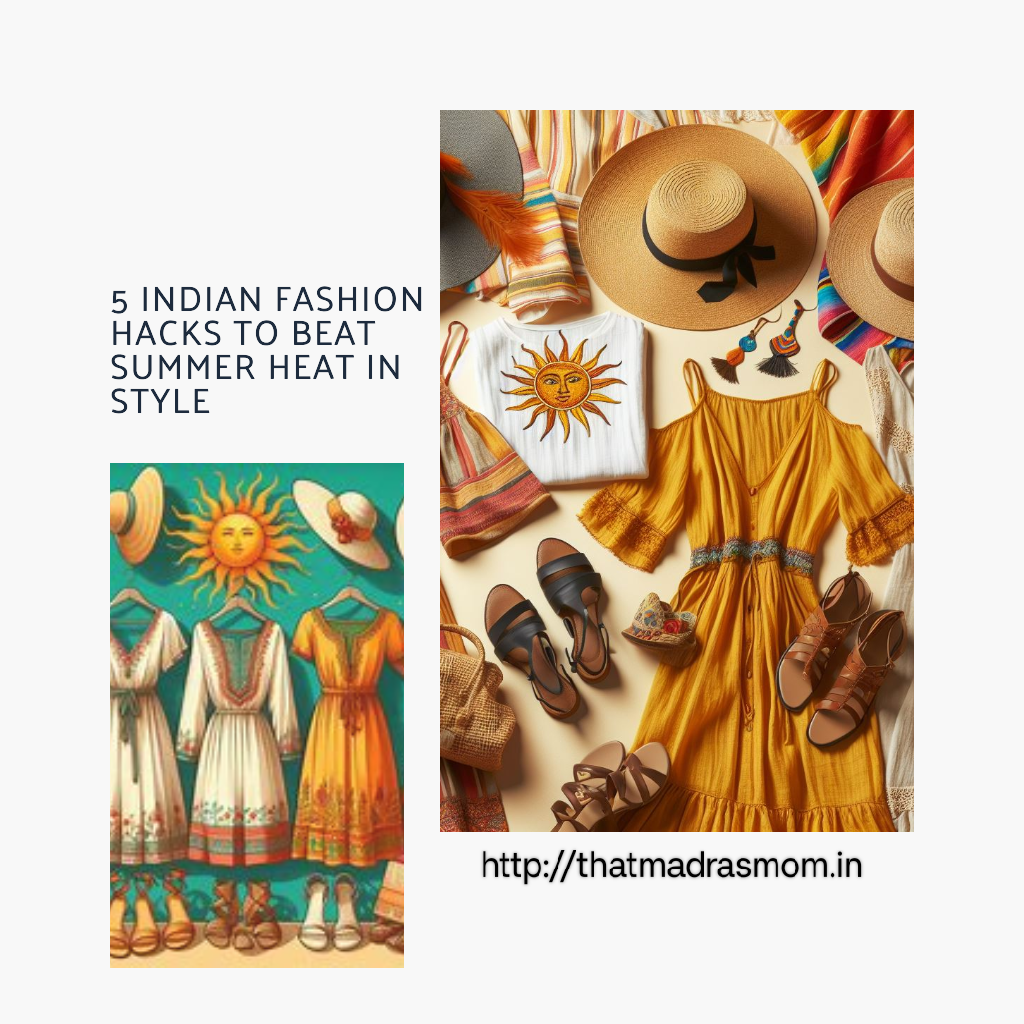
5 Indian fashion hacks to beat summer heat in style

Summer in the Indian subcontinent is synonymous with scorching heat, humidity, and the dire need for breezy, comfortable outfits. In the coming months, we would welcome more sultry weather that we would be drenched in sweat and I cannot even imagine how it is going to be because February and March were so bad. I have already taken out co-ord shorts and kaftans which usually make their entry only in April.


But worry not! Here are five fashion hacks to keep those sweaty bodies cool, chic, and culturally inspired during the sweltry months.


Light layers


Layering might raise eyebrows in this heat or to put it clear it can be counterintuitive, but it is a game-changer. What you can do is opt for linen, cotton, and rayon as they are lighter and can keep you feeling breezy.


Try a cotton tank top under a sheer blouse or a linen shirt over a cotton sundress. The result is a breezy stylist look I bet you will keep repeating.


Swap heavy denim for lighter alternatives


Denim is a wardrobe staple I agree with, but then in sultry weather, I’d trade them for some things like parachute pants, denim shorts or skirts, or lightweight jackets. Because jeans can be suffocating.


Chambray and linen are equally good alternatives.


Breathe easy with breathable footwear


This is a great opportunity to bid goodbye to boots and close-toe shoes and trade them for sandals, flip-flops, and espadrilles.


I gifted myself two pairs for this summer and I can’t wait to wear them out.


And you will be surprised to see that your feet will thank you and it’s time to show off your pedicure.


Shade and style with hats


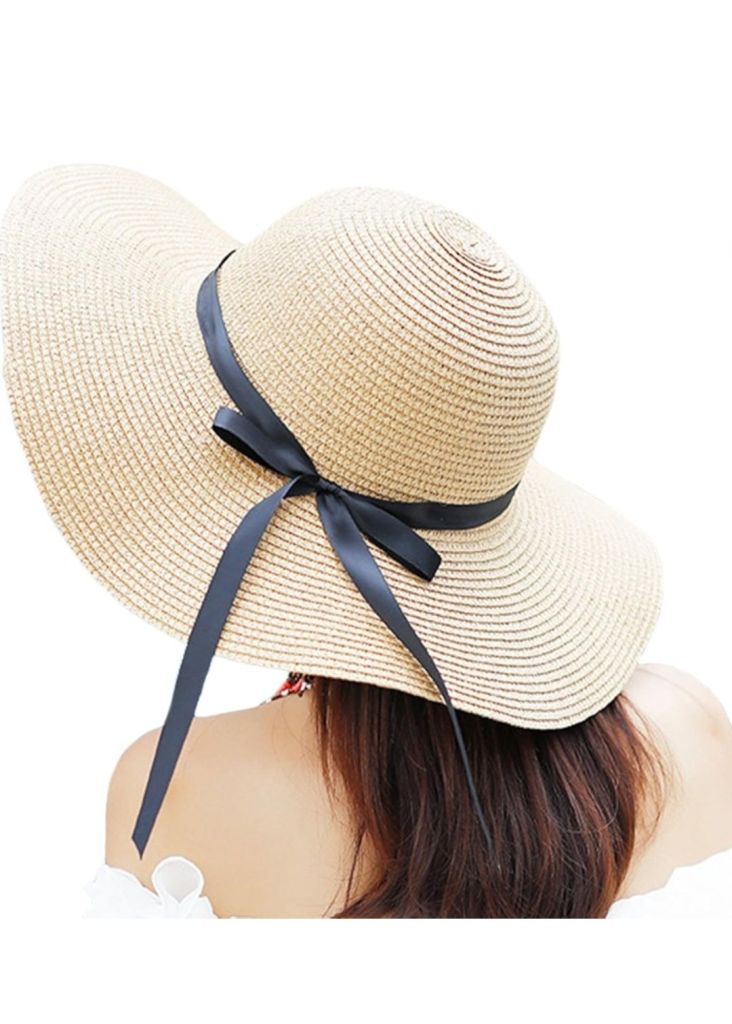
Hats are not just accessories but most wanted weapons because they are sun shields. You can opt for wide-brimmed ones which will protect your face and neck.

Baseball caps add a vibe whereas if you go in for straw hats, they scream elegance.


Scarves: The versatile summer essential


Scarves are not just for winter. They add a pop of color to your summer outfits.


Just tie them around your neck or make them a headband or even around your handbag for instant styling.


Always keep in mind summer fashion isn’t just thriving in heat but also keeping it stylish. Make sure to embrace these Indian hacks and make your wardrobe sizzle.

This blog post is part of the blog challenge ‘Blogaberry Dazzle’ hosted by Cindy D’Silva and Noor Anand Chawla in collaboration with Mads’ Cookhouse.

Z in Indian women fashion

We have finally reached the end, does this mean the trends end here? No way. We already know that it keeps changing with time. But I know that you can find a lot of ideas from the posts here and give it your own twist and voila you may even bring out a trend sooner.
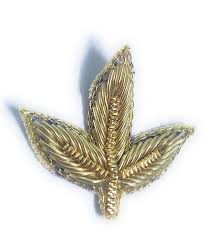
For Z we are going to be exploring zari. Wait does that even need an introduction here in India? No right. A type of thread that is either gold or silver wire which adorns traditional fabrics like sarees, lehengas, and dupattas, the zari is an integral part of the textile and fashion industry.

Image source Indiamart


A popular choice for traditional events like marriages and other religious occasions the zari adds a touch of elegance and opulence to the fabric making it appear rich and luxurious.
The Persian and Turkish artisans introduced the zari concept during the reign of the Mughal emperors. This art was refined during the Mughal era and perfected to be made into garments for royalty. The zari became an integral part of the attire for Royalty in the Mughal era.


Skilled artisans require precision and attention to detail when they work on this labour-intensive process of weaving the zari. The gold or the silver wire is twisted with cotton or silk making it durable and then being woven into the fabric to create embroideries and embellishments. It is then woven into patterns and motifs.


Zari adds a touch of luxury and elegance to the garment when it is used to create intricate patterns, designs, and motifs on sarees, lehenga, and traditional wear. A simple zari motif can make a normal-looking dress appear grand.


Banarasi zari is one of the popular forms of zari work. Banarasi saree has intricate zari works which make it one of the most luxurious sarees in the country. The banarasi saree with zari is one of the finest fabrics in India. Real gold or silver is used in the zari for Banrasi sarees and has intricate motifs, designs, and patterns for a grandeur look.

Image source Amazon


Zardosi embroidery is another popular form, where the zari thread is used along with beads and sequins. It is a painstaking process that requires a lot of patience and precision. Since it is handmade it takes a lot of time to complete a single piece of fabric, that depends on how complex the design is.

Image source Indiamart


Even today skilled artisans work tirelessly to create exquisite pieces with stunning designs and motifs which are the hallmark of the Indian fashion Industry.

This post is part of #blogchatterA2Z 2023.

Y in Indian women fashion

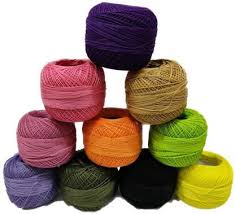
We are almost at the tail end of knowing about Indian women’s fashion trends from A-Z. We have covered everything from fabrics, weaves, techniques, and dresses and we now come to the most important element that forms the basis. Yes, we are talking about yarn. Let us look.

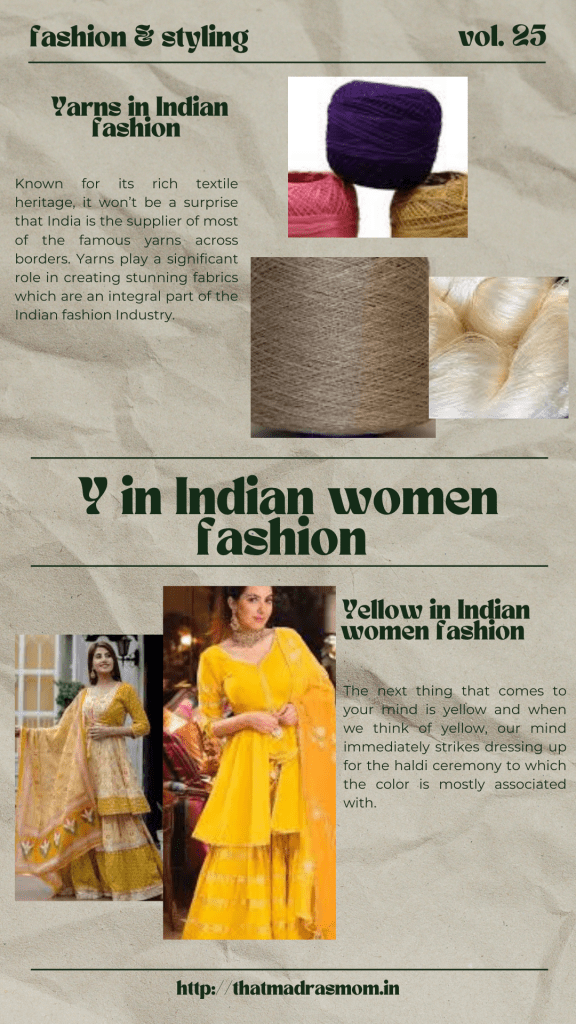
Known for its rich textile heritage, it won’t be a surprise that India is the supplier of most of the famous yarns across borders. Yarns play a significant role in creating stunning fabrics which are an integral part of the Indian fashion Industry.

Image source Flipkart


A widely used yarn is cotton known for its versatility and durability. From sarees to salwar kameez to even handkerchiefs, the fabric is sweat absorbent and is great for hot and humid climates. It is not only the most sought out in the country but also across the world for its softness and absorbing capability. The cotton yarn is a great choice to add vibrant colors to fabrics.

Image source Indiamart


Being one of the largest producers of silk and exquisite silk fabrics, India is famous worldwide for the quality of the silk yarn. From sarees, lehengas to most luxurious traditional garments silk is the most preferred fabric for its richness. The yarn is priced for its strength, sheen, and softness making it a great choice for special occasions like marriages.


Though India may not be a producer of wool, importing it to make sweaters, cardigans, and coats. A lot of women took to the art of knitting and is widely popular across the states.

Image source Indiamart


A lightweight breathable fabric is linen that is now becoming popular. Great for everyday wear in tropical regions where the climate is hot and humid, linen is a popular yarn used in the fashion industry.


When it comes to bags and footwear, which are accessories, jute is a widely used natural fabric that is sustainable, robust, and durable. It gives a unique and earthy texture to the products and is also eco-friendly.


As time passes and trends evolve, yarns that are recycled and sustainable like bamboo and hemp are also used because they are environment friendly and play their part in reducing the carbon footprint of the Indian Fashion Industry.


The next thing that comes to your mind is yellow and when we think of yellow, our mind immediately strikes dressing up for the haldi ceremony to which the color is mostly associated with.


Here are a couple of yellow outfit ideas for the next haldi ceremony that you want to attend.

Image source Myntra
  • A yellow mirrorwork lehenga in raw silk goes perfectly great for haldi ceremony.
  • An asymmetrical yellow dress is great as an Indo-western outfit for haldi ceremony.
  • A yellow and green lehenga with mirror work and a light tinge of pink here and there is a great choice.
  • A plain yellow saree with a bright-colored half-sleeve blouse.
  • A yellow cotton saree with a bright orange bandhni blouse.
  • A layered yellow skirt, embroidered blouse, and lots of accessories.
  • A monotone yellow skirt with a blue blouse.
  • A yellow skirt and neon green blouse is sure to rock the party.
  • A yellow saree with minimal gota patti work.
  • A complete yellow lehenga heavily embellished with beads, stones, and exquisite embroidery.


Yellow cannot only be styled for haldi but also for other wedding festivities.

Image source meesho
  • A yellow lehenga with a net dupatta for the cocktail party is a great outfit option.
  • A yellow silk kurta with a matching skirt and dupatta is just awesome.
  • A ruffle saree in yellow with a statement blouse is great for the wedding.
  • A yellow Anarkali can be worn as a gown for an engagement or even a cocktail party.
  • A simple saree with a gold border and a heavy blouse aress great for cocktail parties.

A cheerful color yellow is sure to make heads turn if you style it alone or even with vibrant combinations.

This post is part of #blogchatterA2Z 2023.

X in Indian women fashion

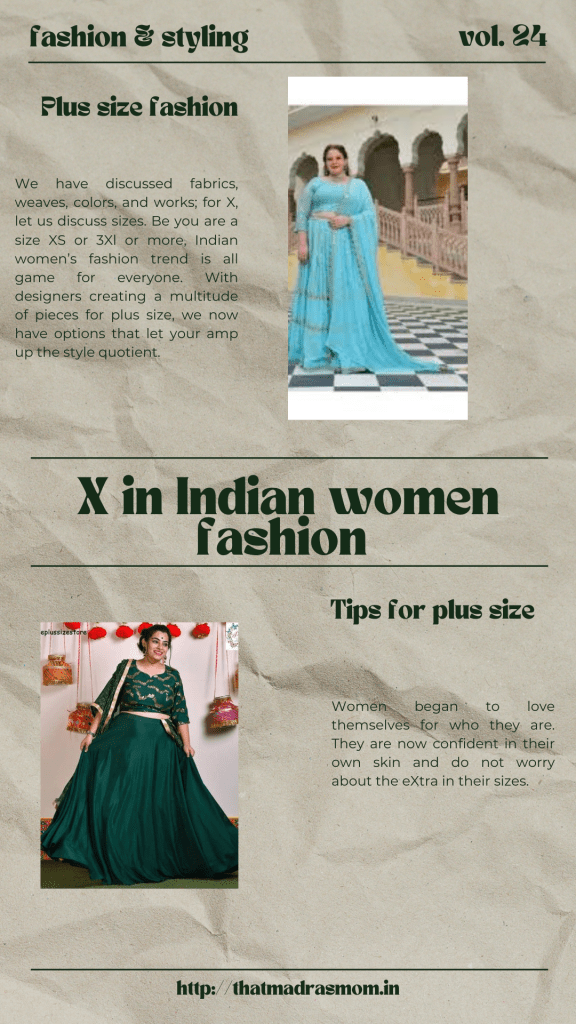
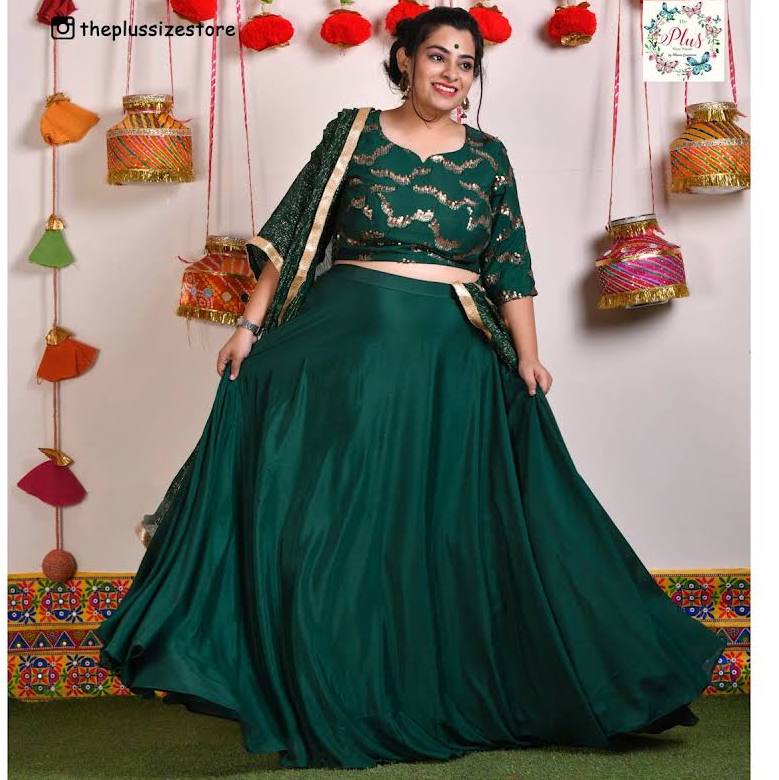
We have discussed fabrics, weaves, colors, and works; for X, let us discuss sizes. Be you a size XS or 3Xl or more, Indian women’s fashion trend is all game for everyone. With designers creating a multitude of pieces for plus size, we now have options that let you amp up the style quotient.

Image source meera’s plus size store


We have moved on from a period where we were told that there are no sizes beyond XL, to a period where we crossed that this store does not cater to the plus-size category. Gone are the days when it raised eyebrows when we mentioned an XXL. We have now come to the period where we find plus size clothes as comfort wear. Who does not love an oversized shirt to crash at home?


Social media has played a major role in letting people know that body positivity awareness must spread. People should not feel shy about how they look and in fact be bold to dress up and show up. Body-positive, plus-size influencers on Instagram had a major role in bringing in the shift among the masses. Be it their styling ideas, sourcing of garments, or even the way they carry themselves gave people the confidence to be proud of what they are.


Gone are the times, people sit at home thinking that they do not have anything to wear or have run out of options. The fashion industry has opened doors to a new segment of plus-size fashion that not only caters to women in plus-size but also to wear who wanted to dress comfortably.


Women began to love themselves for who they are. They are now confident in their own skin and do not worry about the eXtra in their sizes.

Image source Mirraw

As a bonus note, here are a few tips if you are plus-size.

  • Opt in for light fabrics like chiffon, georgette, or satin. Be it the blouse or lehenga. Heavier fabrics can make it go wrong.
  • Vertical and diagonal stripes work great and do not settle for horizontal or broad borders.
  • And as for the blouse neckline go for a deep V-neck or plunge neckline.
  • Three-fourth or full sleeves will work great and give you the right fit.
  • Corset pattern for lehenga and saree is a trend that helps hide the belly and helps in shaping you up.
  • Go for free-flow pallu and do not pin it up and as for the pleats on the front, go for minimal ones.
  • Dark color gown with a sweetheart or deep V-neck works perfectly well for plus-sized bodies.
  • Choosing the right kind of clothing with make you look eXtra special even if you are on the eXtra large or plus-size segment.

This post is part of #blogchatterA2Z 2023.

W in Indian women fashion

Being a land of diverse cultures and traditions, it all reflects Indian women’s fashion. The color white holds a special place among designs, patterns, and colors. White reflects purity and elegance. Though in some traditions white reflects sadness and sorrow, some do associate the color with happy occasions.


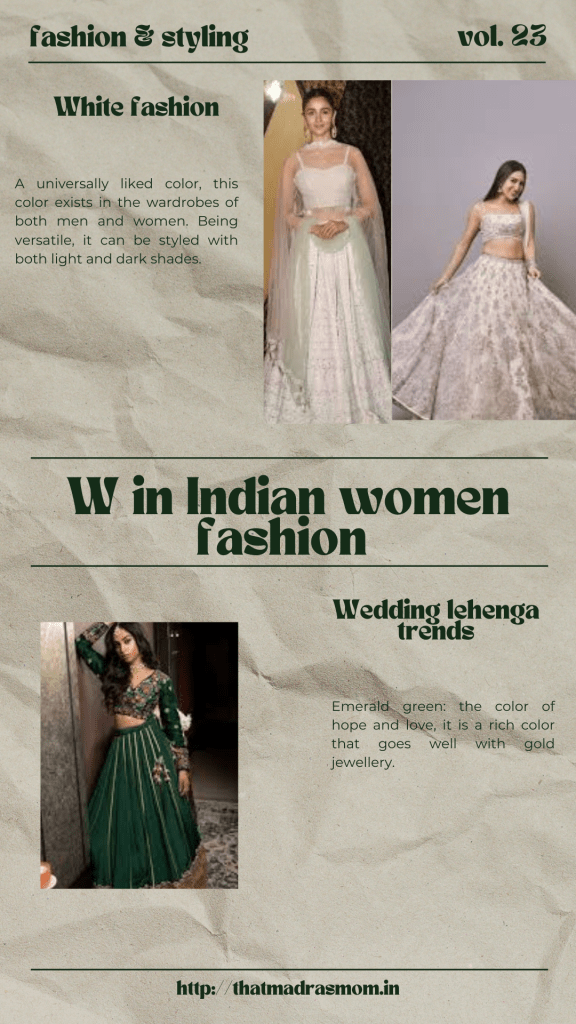
A universally liked color, this color exists in the wardrobes of both men and women. Being versatile, it can be styled with both light and dark shades. Be it weddings or cocktail parties white is a great choice for choosing your attire.
There was a season when white replaced pinks and reds.

Image source Vogue

Alia bhatt’s lehenga was the talk of the town, the white lehenga that was layered with sheer and had silver thread work caught everyone’s attention that brides to become in favor of the humble color for their choice of wedding attire.

Image source Vogue


Sara Ali Khan flaunted a lehenga choli that had floral embroidery in pink and was embellished with mirror work over white fabric that gave a grandeur look.


On that note when we talk about the trends in W, I thought I’d also give a couple of wedding trends for lehengas because we are talking about ‘W’.


Light gold lehenga: A great choice of color for lehenga that can be apt for weddings to after parties. This color will give you the versatility to pair up with any color of your choice later when you choose to reuse this outfit for any other occasion. Not only that just change the accessories and tada you are ready to rock the party and even traditional rituals.


Multicolored embroidery: These levels up the lehenga game and it gives you a different dimension. It makes your outfit extra luxurious when you play with a myriad of colors on your outfit.

Image source Pinterest


Emerald green: the color of hope and love, it is a rich color that goes well with gold jewellery.


Ombre choice: For brides who get confused if they should go for pastel shades or dark, the ombre is a great solution.


Color blocking: Gone are the days when wedding attire is monotone, the concept of color blocking is great when you want to play with shades of light and dark.

This post is part of #blogchatterA2Z 2023.

U in Indian women fashion

The Indian women’s fashion trend depends on weaves and garments and how women carried themselves. Women in films whom I would say were the first role models we look up to even today for fashion inspiration. Though at times like today, we have social media at our fingertips, when we refer to a trend, we most often mention the name of the celebrity who sported it.


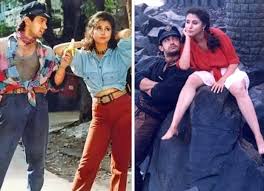
Urmila Matondkar


The ‘Rangeela’ girl as we know her made all of us even women who went in awe looking at her on screen. Be it her beauty or hair, the costumes she wore had a lot to speak about. Manish Malhotra, the designer also mentioned that there were copies of her costumes post that movie on every street. The movie that made him win the Designer of the Year award. Her designs in the movie ushered in fashion trends and became a style statement.


The peplum skirt, knotted tops, black saree, and red leggings were an instant hit among the womenfolk of the country. Her smart casuals looked very glamorous and became a trendsetter. Her gharchola and the bandhani in the song made the weave much more famous and preferred for the ghaghra. Her tangerine skater skirts, the pleated skirts were such a hit. Though it is nearly 28 years since the movie was released, the trends she set are still timeless and are great fashion inspiration for a confident woman.

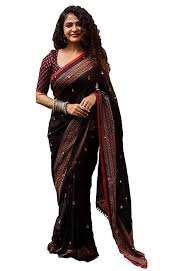
Uppada

Image source Karagiri


Tracing back its origin to the 18th century, when the country was ruled over by the East India Company, the weave is from the Uppada town in Andhra Pradesh. A traditional handloom technique is known for its intricate designs and fine texture; the weave is a testimony to skilled craftsmen.


The Weaver population from Uppada migrated to Peddapuram where they happened to learn the weave of Jamdani from the Bengali weavers. They incorporated their techniques into jamdani which brought out a new weave called the Uppada. It is lightweight and the sheer texture gives a grandeur look and is most sought after for making traditional garments.


The weavers take great pride in their artistry which is time-consuming, complicated, and labor-intensive. A diverse range of patterns with motifs that include nature and geometric designs in vibrant colors make the weave unique. Gold and silver zari threads are used for extra richness to the woven fabric. The intricate designs and elaborate borders on the pallu are the highlight of the uppada weave. The metallic thread in the body adds grandeur to the fabric.


Another unique feature is the texture of this weave which is lustrous and has a sheen which is because the warp is made of pure mulberry silk and the weft is a combination of silk and cotton that is responsible for the shine.
The uppada weave has received the GI tag from the Government for its uniqueness and authenticity which is another reason for its boost in the global retail market. It is a weave that is cherished by the connoisseurs of handloom textiles and is even passed through generations as an heirloom.

This post is part of #blogchatterA2Z 2023.

R in Indian women fashion

An ever-evolving industry, the Indian women’s fashion segment is constantly influenced by varying trends that come and go. Not only attire but the material that is used also plays an important role in fashion trends. For example, there is a difference between a cotton saree and a chiffon saree. Each is different on its own, be it comfort, durability, and efforts taken to maintain.


Gathered or pleated strips of fabric that aid volume and give an appearance of a frill is called ruffle and that is now becoming a fashion trend. Right from sarees to gowns to even crop tops, the trend has hopped across categories of garments that aid more grace and elegance.


From sleeves, yokes, hemlines, and even dupattas can have ruffles of various sizes ranging from large to small based on the look or the occasion for which the garment is to be worn. The ruffle adds a touch of femininity to the wearer. Elegant in appearance it tends to highlight the curves. It also adds depth and creates movement when worn.

Image source pinkvilla


This movement and depth make an eye-catching appearance of the outfit. It gives a vintage and bohemian outlook to the outfit. Its ability to be able to incorporate into various fabrics or patterns makes it versatile. While Chiffon, georgette, and organza that is lightweight give a dreamy effect when a ruffle is added, silk, satin, and velvet get a lot of volume when a ruffle is added since they are more structured.

Image source Amazon


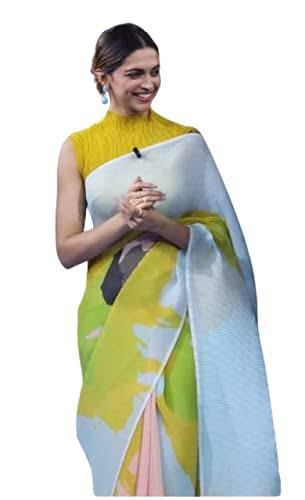
Designers have incorporated the ruffle trend in most Indian attire and it especially gained a lot of traction when Deepika Padukone wore it for Cannes. Her off-white ruffle saree with pearl collar designed by Abu Jani and Sandeep Khosla for the closing ceremony brought this trend alive and much sought-after. Not to forget yet another time when Deepika flaunted a dual-tone ruffle saree to a popular TV show with colors right out of a candy shop was an instant hit that a lot of manufacturers adopted the design to offer it to the masses who wanted to follow their star. If you would want to check out the saree you can buy an affordable one just by clicking here.

This post is part of #blogchatterA2Z 2023.

N in Indian women fashion

An attire that has been worn for centuries, six to nine yards, draped in different styles to give a unique look. A fashion statement and a symbol of Indian culture, it is a popular attire across the world and not only in India.
Now let us look at some drapes and fabric in N.

Nivi drape

Image source Amazon


The most common saree drape that you can see around and the easiest drape. Originating from Andhra Pradesh where the Nivi tribe lived, the drape is known for simplicity and elegance. It is a drape that is favored and worn by women from all age groups and body types.
It is easy to wear, and quick to drape making it a good choice for everyday wear. It is draped over the left shoulder with pleats centered at the waist, leaving it loose over the shoulder and to the floor. The length is either six or nine yards. From formal events to casual outings, this drape is the most versatile option. The drape suits all types of bodies by accentuating the curves and giving an overall feminine touch.


Evolving over the years, women have experimented with fabrics, colors, and even the way the pallu is pinned. Some women tend to keep it pinned to shoulders for formal occasions, while in some cases it is let loose to flaunt the design or the embellishments which could be embroidery, sequins or stone work.
Designers have now incorporated the drape into garments that feature this pre-stitched pleating in gowns which makes it look elegant. A timeless and elegant drape of the nivi drape is a fashion statement for years to continue.


Nauvari drape

Image source Amazon


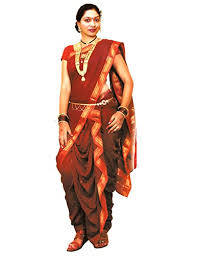
A drape worn by the womenfolk of Maharashtra, the nauvari drape is worn by draping a nine-yard saree. It is the traditional drape of the state of Maharashtra. A popular choice for weddings, festivals, and cultural events, this drape that represents the Marathi culture is also known as the Kashta drape.
To give the look of dhoti, the pleats are tucked into the leg, then draped over the left shoulder, and pallu is pinned. Draping the saree around the torso and then pinning it at the back gives a diagonal look.


The unique feature is that the drape allows ease of movement and is loved by women of all age groups. Women now experiment with different fabrics and have embellishments that accentuate the beauty of the saree. Accessorizing it with a nath on the nose really gives an elegant look.


Not only for women in Maharashtra but the drape is also preferred by many women across the country who choose to drape this style for events and cultural occasions.


Ngotekherh weave

Image source Asiainch


Characterized by intricate designs and vibrant colors, the Ngotekherh weave is a weaving technique practiced by the Tangkul tribe of the state of Manipur. Known for geometric patterns and the bold colors on fabric the ngotekherh weave has a presence of natural dyes from tree bark, and flowers which give long-lasting color.


It is a technique that is passed across generations from grandmothers to granddaughters. This helps in preserving the artwork and at the same time having more skilled people know the nuances.

This post is part of #blogchatterA2Z 2023.

J in Indian women fashion

Indian fashion is an evolving industry that keeps coming up with new designs every day. Based on comfort, affordability, the fabric used, and the occasion or region where it is worn we have lots of options when it comes to styling.


Let us take a look at trends in J.


Jamawar

Image source Isha foundation


A beautiful, luxurious fabric prized for centuries, the Jamawar is known for its intricate designs and most importantly its reversible nature, along with the use of gold and silver yarn which makes it a symbol of elegance.


It is a type of shawl made with silk, wool, and gold, silver threads that trace back its origin during the reign of the Mughals. A symbol of wealth and luxury the Jamawar is woven in Iran, India, and Pakistan. Weaved as a special garment for royalty it is also an expensive trade commodity, which makes it a prized possession and a symbol for the elite population.


The pattern is drawn on paper and then transferred to warp threads, it is then tied, and dyed as per the drawn design post in which the weft thread is inserted. The design on one side is a mirror image of the other making the fabric reversible which is possible with the kani technique of weaving. The weaving is done on the back following the design which appears on the front.


The designs are predominantly inspired by nature like paisleys, and flowers. The Jamawar is known as an adulterated form of the pashmina weave. But then the production has also declined because of the cheaper availability of fabrics that are machine-made.


Jamdani

Image source meesho


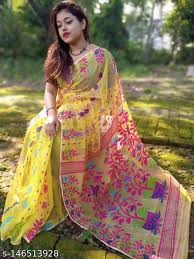
Particularly originating and to have been practiced in Bangladesh and Bengal, the Jamdani is a handloom weaving technique that is done with intricate designs on cotton fabric. Derived from the Persian word ‘Jam’ which means Flower and ‘Dani’ which means vase, the weaving includes making designs of flowers onto the fabric.


A thicker cotton thread katan is woven between warp threads and to which the weft is inserted later. The Katan is removed once weaving is done, which results in intricate patterns being done on the fabric which look vibrant. The quality can be decided based on the design and skill of the weaver. The more skilled the weaver is, the more intricate the design on the fabric. The fabrics are lightweight and most suited for hot and humid climates.


Due to cheaper machine-made fabrics, Jamdani production is declining which Government is taking steps to preserve this weaving technique and train skilled weavers, and bring this art to the next generation to be taken forward. Several non-profit organizations along with the Government train skilled laborers, support them and create employment opportunities for their livelihood.

This post is part of #blogchatterA2Z 2023.