Essential Lifestyle Changes for Women After 30: A Guide to Healthy Living

Turning 30 marks a significant phase in life where health and wellness take centre stage. Prioritizing sustainable habits can boost energy, enhance longevity, and build resilience against age-related concerns. As they say how you live in your 30s will decide how you will in your 60s¸it is vital we make changes beforehand to lead a peaceful healthy life thereafter. Here are some essential lifestyle changes that women should embrace for a healthier and more fulfilling life.


1. Nourish Your Body with Smart Nutrition


Gone are the days of reckless eating. Focus on nutrient-dense foods that support hormone balance and overall well-being. Consider incorporating:
Protein-rich meals for muscle maintenance and metabolic health
Healthy fats like avocado, nuts, and seeds to support brain function
Calcium & vitamin D for bone strength
Antioxidants from fruits and vegetables to fight aging
Avoid excessive sugar and processed foods, and drink plenty of water to maintain hydration and skin health. Including millets can be a game-changer.


2. Prioritize Strength Training & Mobility


Cardio alone isn’t enough—strength training plays a crucial role in maintaining bone density and muscle mass, both of which decline with age. Incorporate:
Resistance exercises to prevent osteoporosis
Yoga & stretching for flexibility and stress relief
Walking & active movement throughout the day
Consistency is key—your future self will thank you! All these will lay a solid foundation for mobility and stamina post 50s and 60s.


3. Take Charge of Hormonal Health


Hormonal fluctuations become more noticeable in your 30s, affecting metabolism, mood, and skin. Support your thyroid, reproductive, and adrenal health by:
Managing stress through meditation or mindfulness
Eating hormone-balancing foods like flaxseeds, greens, and omega-3s
Avoiding excessive caffeine and alcohol
Tracking menstrual health and consulting a doctor if needed. Taking good care now will ease stress during menopause.


4. Upgrade Your Sleep Routine


Poor sleep accelerates aging and weakens immunity. Optimize your sleep hygiene by:
Maintaining a consistent bedtime
Reducing screen exposure before sleep
Investing in comfortable bedding
Practicing relaxation techniques like deep breathing.


5. Invest in Mental & Emotional Wellness


A healthy body thrives when the mind is at peace. Prioritize emotional self-care by:
Practicing gratitude and journaling
Building strong social connections
Seeking therapy or counselling if needed. It is always good to let out rather than piling up emotional baggage.
Setting boundaries for personal well-being. This is indeed a very difficult step to take but definitely if peace over everything, this must be done.


6. Focus on Preventive Health Care


Regular check-ups are non-negotiable. Stay proactive with:
Annual health screenings for breast, thyroid, and heart health
Dental and vision care
Skin health assessments for early signs of aging or concerns
Taking charge of your health before issues arise is the smartest move.


7. Redefine Self-Care Beyond Trends


Self-care isn’t just about face masks—it’s about personal growth, inner peace, and holistic well-being. Prioritize activities that nourish your mind, body, and soul, whether it’s reading, traveling, or simply spending time in nature.


Also in the midst of all this, don’t forget to spend time with the people around you. It’s just one life so let’s live with no regrets.


Conclusion


Your 30s are a time to embrace change, evolve, and prioritize well-being. By making these sustainable lifestyle adjustments, you can build a strong foundation for lifelong health and happiness. The key is consistency, self-awareness, and balance—your journey toward wellness begins with small steps.

This blog post is part of ‘Blogaberry Dazzle’
hosted by Cindy D’Silva and Noor Anand Chawla
in collaboration with Mister Tikku.

Brave Inked Emotions -Review

BLURB

Emotions are beautiful but are also very powerful. They can uplift us at one moment but can sink us really deep the very next. Every coming generation seems to be getting weaker and weaker in handling their emotions and it is heart-breaking to see so many succumbing to suicide or mental health failure. To us not only our emotions are extremely vital but also of our loved ones and each one of us devices his or her own techniques to fare better when thrown out of our comfort zone and I guess experience teaches us the most about how to secure our emotional wellness.


So here is a delve into 31 soulful life experiences of eminent Indian writers of how life taught them precious lessons on emotional strength which someone in a similar boat can use as a guiding light to deal better. You can read an unimaginable range of true stories here right from a young bride’s exemplary resilience to a wheelchair-ridden young girl’s biography. There’s a counselor giving her heart and soul to her student and there’s a destiny’s chosen child stumbling and weaving back life at every step in life and many many more. They all will touch your soul like never before, giving you precious lessons on emotional wellness.

MY REVIEW

Resilience, vulnerability, and emotions are delved into deeply in each of these 31 chapters in this book which is a combined effort of 31 remarkable authors. The book cannot be just an anthology, but it is a combined effort of 31 authors who have shared their heartfelt experiences and their learnings that will help people sailing in the same boat.


We live in a generation where people are quite hesitant to acknowledge emotional issues. Not only in us adults but also gives insights into how to handle emotional wellness in kids separately.


“Do not judge a book by its cover.”
“You never know what someone is going through until you are in their shoes.”
I’ve seen a lot of videos of Dharman which let you understand empathy and situations that make you understand that human emotions are not just feeling but much more than that.
Having known a few of the authors personally and what they’ve gone through, it is truly a commendable effort for many of them to come forward, share their experiences, and their way of life to deal with emotions. That thought of this life lesson will help many who are like us are applauded.


There are two things, one is dealing with ourselves and the emotions, the latter is emotions and the people with whom we deal. The book helps you understand different situations involving parents, kids, and in-laws.
There is no human being without a problem, no human being who is always happy. Everyone at some point of time in their life would have faced a standstill, a moment, or a period where they needed help, and didn’t know what to do or how to come out of it.
Every chapter where the authors share their life experiences, especially in a way that they connect with the readers. In most self-help books where people discuss emotions, we often see a preachy narration. This is where the book stands out, the connection they make with the readers will surely help in uplifting.


A unique synergy is a blend of personal experiences with professional insights. It would be right to call this anthology a holistic resource that will serve as a beacon for those who are struggling and for those who love to read and learn from experiences.  The book will be a great option as a gift to someone whom you know who needs the courage and uplifting to move ahead.


I’ve purposely not mentioned in detail any of the chapters from the book, because I would want you to buy, read, and enrich yourself in the experience.

A truly remarkable anthology powered by Roma Gupta Sinha and the team of women.

Buy yourself a copy or gift to your loved ones.

Announcement of Anthology – Brave Inked Emotions

As soon as the calendar points to March, you begin to see the internet brimming with information about addressing women as their central focus. Though International Women’s Day is a moment to reflect on the progress and the challenges that still lie ahead, it is more than just a celebration it is a call for action to accelerate gender parity.
When we say emotion it not only means happiness, excitement, surprise, and sadness, but there is much more. And handling them in a better way needs a lot of life lessons. I am happy at one moment, sad the next and jump out in excitement. Am I responsible for these emotional changes and the responses that I give out? Or is there an external factor that is responsible for triggering these emotions from inside me?
Not all of us are open about the emotions that we feel inside us. It is always wise to experience the emotion and let it out. Piling it up inside will not only prove bad to yourself but also to others when suddenly it bursts out all at once like a bottle of champagne. Emotions need to be channeled well and for that emotional wellness needs to be taught from an early age.


This is precisely the theme of an Anthology that I’m about to introduce to you, “Brave Inked Emotions” by 31 authors who experienced emotions and handled them with greater strength. Guided by Roma Gupta Sinha who has a lot of accolades to her name including successful book launches this book is a gift to women across the world on this Women’s Day.


Stepping out of our comfort zone might break us but can that be handled smoothly? Yes. This book will guide you through an emotional journey of 31 different experiences that helped them come across the river of emotions that they braved ahead of and would love to share with the world what worked for them and how it can help you.
The chapter that I contributed was specific to handling emotions in kids. As a parent of two, I had different experiences in handling both my kids when it comes to handling their emotions. Parenting them both during their early days made me understand that each finger in the hand is different. That’s when I decided I would handle them differently and teach them emotional wellness from an early age.


I’d urge you to pick a copy, read it, and feel the emotions. This book will want you to share it with your girlfriends. The book will bring a change in each one of us in how we handle emotions. DO give it a read and share your experiences.

This blog post is part of the blog challenge ‘Blogaberry Dazzle’ hosted by Cindy D’Silva and Noor Anand Chawla in collaboration with Mads’ Cookhouse.

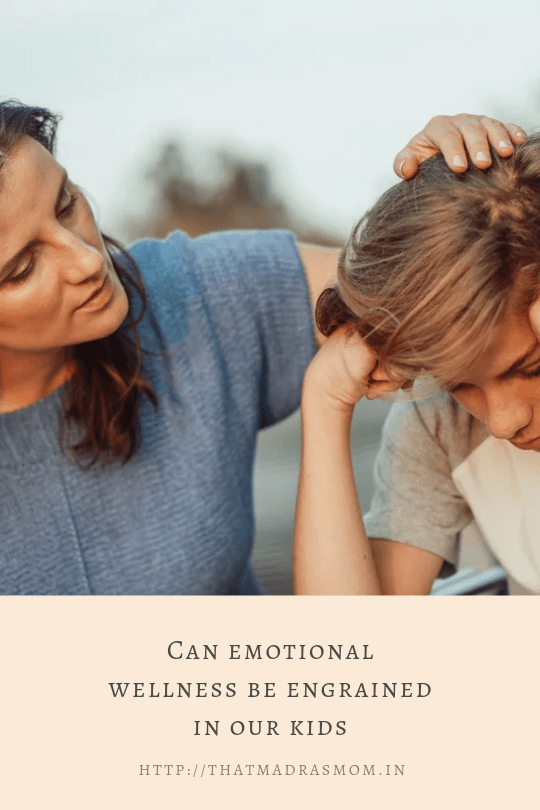
Can emotional wellness be engrained in our kids?

As much as we stress physical wellness in kids, it is time that their emotional wellness is considered equally important. The ability of the child to recognize, understand, and manage feelings effectively is termed emotional wellness. This process of cultivating emotional wellness in kids is dynamic and developed over time through experiences and interactions.


It is an ongoing process that the child goes through while being nurtured and developed, it cannot be compared to facts and knowledge that gets engrained. Living in a fast-paced world, it is of utmost importance that emotional wellness is taught to kids to manage their emotions or feelings with tools in a healthy way.


To thrive well in all aspects, build strong relationships, and be better equipped to face challenges children must be taught to be emotionally resilient. We as parents must use strategies to bring up kids who are good with emotional wellness and assist in creating a strong foundation for their journey into emotional wellness.

These strategies will help instill emotional wellness in kids in the long run.


Being a role model


We as parents or caregivers are their first role models. We play a major role in shaping their emotional well-being. Demonstrating emotional intelligence by acknowledging and expressing feelings healthily is the first step. Discussing what we feel and how we express, models how we emotionally express ourselves and makes them understand the safe space where they can express themselves freely.
The heart of family life is love, acceptance, and security which the child must understand does not depend on their accomplishments. Mistakes or defeats must be accepted and expected. A home that is full of unconditional love and affection is where confidence finds its way.


Nurture their self-esteem and confidence


Setting realistic goals: children when young need realistic goals that help match abilities with ambitions. Old children can increase their self-confidence by choosing goals with your help which also tests their abilities.


Praise them: Encouraging the child in the initial steps will make them want to learn more and explore. Giving them a safe space to explore, assuring them often through interaction and smiles will let them know they have your attention which in turn builds their self-confidence.


Being honest: We should never hide our feelings and let them know about failures. This will help them understand that mistakes do happen and adults make them too.


Avoid sarcasm: When the child faces defeat, talk to them to understand how they feel. They need a pep talk when they are upset. Assure them later when they are ready to talk.


Skills that can be taught: Empathy, communication, and self-regulation are emotional skills that can be taught and practiced. We parents or caregivers can provide children with opportunities to practice the same.


Resilience: It is the ability to bounce back from adversity which can be taught by helping kids understand how to cope with defeats, setbacks, disappointment, and stress healthily.


Individual differences: Every child is unique, wherein their level of emotional development may vary. Some children who are naturally more resilient may cope well whereas some might need more guidance and help. We must recognize these differences and handle them accordingly.


Fostering open communication: Open and honest communication is the foundation. This will enable the child to share their feeling both positive and negative. We as parents should not jump to conclusion rather listen to them attentively and ensure them that their emotion is valid. If this is done the kid will understand that you are their safe space to open up.


Emotional literacy: Teaching them different emotions by labeling them appropriately will help them understand what they are going through and how it can be processed. Books or charts can be beginner tools that the child can use to point out what they feel.


Mindfulness and relaxation


To manage stress and anxiety children can be taught simple mindfulness and relaxation techniques. Breathing, yoga, and meditation techniques will help them be more aware of emotions and handle them effectively. These techniques can be introduced in a child-friendly way.


Limit screens and emphasize outdoors


Excessive screen time can harm their emotional well-being. Encouraging them to spend more time outdoors in physical activities and nature connect can help in fostering healthy emotional well-being.


Empathy and compassion


A vital component of emotional wellness is empathy. Understanding and caring about the feelings of others can be taught to kids by letting them know about perspectives and helping them to look at the world from other viewpoints. Making them engage in volunteering and helping people in need will make them practice empathy.


Problem-solving by resolving conflicts


Kids must be encouraged to solve problems and resolve conflicts from an early age. This will help them understand what they need, how to make people understand, listen to others, and work towards their goals.


When we talk about nurturing emotional wellness in kids, it is a lifelong process that happens dynamically. It cannot be taught overnight. It needs lots of patience, understanding, and consistent efforts from parents. It is a complex world out there, so we as parents can give them tools to handle their emotions healthily.

Encouraging open communication, and empathy, raising self-confidence, making them practice mindfulness, and providing them a supportive space are some of the ways we can help them. But being unique every child takes their time in the journey of emotional wellness. We should be there to guide them and provide them with our empathetic presence, develop resilience, and help them lead a life that is fulfilling and emotionally healthy.

This post is a part of Truly Yours Holistic Emotions Blog Hop by Rakhi Jayashankar and Roma Gupta Sinha’.